MCQ
The functional group which is found in amino acid is
  • A
    $ - COOH$ group
  • B
    $ - N{H_2}$ group
  • C
    $ - C{H_3}$ group
  • Both $(a)$ and $(b)$

Answer

Correct option: D.
Both $(a)$ and $(b)$
d
$COOH$ and $NH _3$ (amine group). So every amino acid has a central carbon with a $H, R$ group (varies for each amino acid), a carboxylic group and an amine group. These groups are joined to a single (aliphatic) carbon. The carbon directly attached to a carboxyl group is the alpha position, so the amino acids in proteins are all alpha-amino acids.

Need a full question paper?

Generate a complete, print-ready paper with questions like this in minutes — across 16+ boards, with answer keys.

Start Generating Free

Similar questions

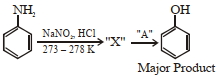
${Image}$

In the above chemical reaction, intermediate $"X"$ and reagent/condition $"A"$ are
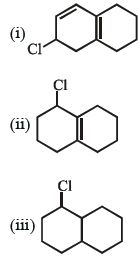
The product formed by the reaction of chlorine with benzaldehyde in the absence of a catalyst is
Which one of the following is an extensive property
The correct order for $E_2$ reaction with alc. $KOH$ will be
Find the emf of the cell in which the following reaction takes place at $298 \,K$ (In $V$)

$Ni ( s )+2 Ag ^{+}(0.001 M ) \rightarrow Ni ^{2+}(0.001 M )+2 Ag ( s )$

$($ Given that $E _{\text {cell }}^{\circ}=10.5 \,V , \frac{2.303 RT }{ F }=0.059$ at $298\, K )$

Which of the following lanthanoids shows $+4$ oxidation state to acquire noble gas configuration?

(At nos. : $L a=57, C e=58, E u=63$ and $Y b=70$ )

The following solutions were prepared by dissolving $10\, \mathrm{~g}$ of glucose $\left(\mathrm{C}_{6} \mathrm{H}_{12} \mathrm{O}_{6}\right)$ in $250 \,\mathrm{ml}$ of water $\left(\mathrm{P}_{1}\right)$, $10\, \mathrm{~g}$ of urea $\left(\mathrm{CH}_{4} \mathrm{~N}_{2} \mathrm{O}\right)$ in $250\, \mathrm{ml}$ of water $\left(\mathrm{P}_{2}\right)$ and $10\, \mathrm{~g}$ of sucrose $\left(\mathrm{C}_{12} \mathrm{H}_{22} \mathrm{O}_{11}\right)$ in $250\, \mathrm{ml}$ of water $\left(\mathrm{P}_{3}\right)$. The right option for the decreasing order of osmotic pressure of these solutions is :
In a set of reactions $m-$bromobenzoic acid gave a product $D.$ Identify the product $D.$

(image) $\xrightarrow{{SOC{l_2}}}\,B\,\xrightarrow{{N{H_3}}}\,C$$\,\xrightarrow[{B{r_2}}]{{NaOH}}\,D$

In which of the following reaction primary amine is not obtained as a product
Which of the following represent correct reactivity order for $SN^1$ as well as $SN^2$
mechanism -