Question
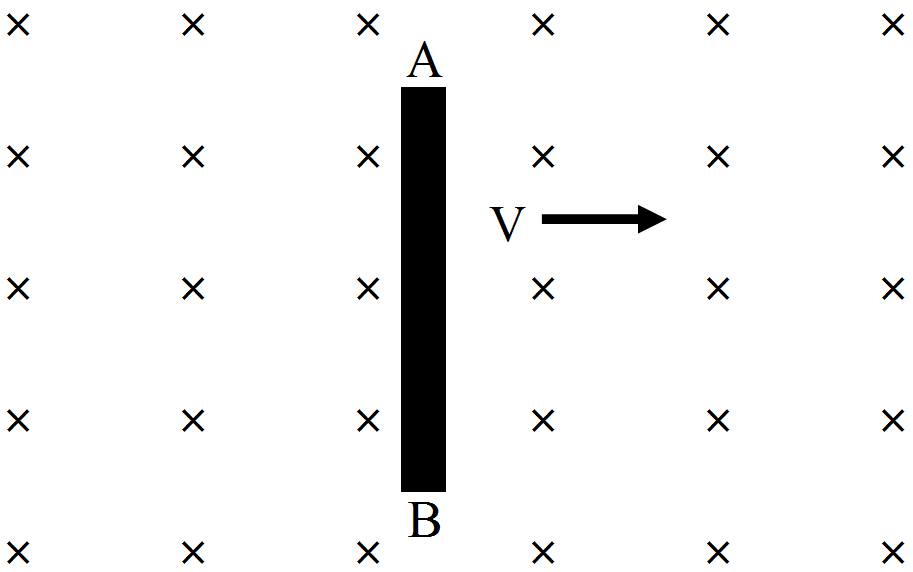
The given figure represents a material which is

|
(a) Paramagnetic |
(b) Diamagnetic |
(c) Ferromagnetic |
(d) None of these |
The given figure represents a material which is
|
(a) Paramagnetic |
(b) Diamagnetic |
(c) Ferromagnetic |
(d) None of these |
(b) Diamagnetic
Generate a complete, print-ready paper with questions like this in minutes — across 16+ boards, with answer keys.
Wave nature of light follows because
|
(a) Light rays travel in a straight line |
|
(b) Light exhibits the phenomena of reflection and refraction |
|
(c) Light exhibits the phenomenon of interference |
|
(d) Light causes the phenomenon of photoelectric effect |
The speed of an electron having a wavelength of  is
is
|
(a) 7.25 |
(b) 6.26 |
(c) 5.25 |
(d) 4.24 |
A straight conductor of length 0.4 m is moved with a speed of 7 m/s perpendicular to the magnetic field of intensity of 0.9 Wb/m2. The induced e.m.f. across the conductor will be
|
(a) 7.25 V |
(b) 3.75 V |
(c) 1.25 V |
(d) 2.52 V |
The equivalent resistance of the circuit shown in the figure is

|
(a) 8 W |
(b) 6 W |
(c) 5 W |
(d) 4 W |
A normally incident ray reflected at an angle of 90°. The value of critical angle is
|
(a) 45° |
(b) 90° |
(c) 65° |
(d) 43.2° |
Which of the following cannot be seen by a microscope?
