Question
The heavier nuclei tend to have larger $\frac{\text{N}}{\text{Z}}$ ratio because:

Answer

  1. A neutron does not exert electric repulsion.
  2. Coulomb forces have longer range compared to the nuclear forces.
Explanation:
This is because in heavy nuclei, the $\frac{\text{N}}{\text{Z}}$ ratio becomes larger in order to maintain their stability and reduce instability caused due to the repulsion among the protons. The neutrons exert only attractive short-range nuclear forces on each other as well as on the neighbouring protons, whereas the protons exert attractive short-range nuclear forces on each other as well as the electrostatic repulsive force. Thus, the nuclei with high mass number, in order to be stable, have large neutron to proton ratio $\frac{\text{N}}{\text{Z}}.$

Need a full question paper?

Generate a complete, print-ready paper with questions like this in minutes — across 16+ boards, with answer keys.
Start Generating Free

Similar questions

The magnetic susceptibility is negative for:
The refractive index of water is $1.33$. The direction in which a man under water should look to see the setting sun is
The magnetic materials having negative magnetic susceptibility are:
A free neutron decays to a proton but a free proton does not decay to a neutron. This is because:
  1. Neutron is a composite particle made of a proton and an electron whereas proton is a fundamental particle.
  2. Neutron is an uncharged particle whereas proton is a charged particle.
  3. Neutron has large rest mass than the proton.
  4. Weak forces can operate in a neutron but not in a proton.
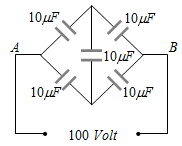
Five capacitors of $10\  \mu F$ capacity each are connected to $\text{a d.c.}$ potential of $100$ volts as shown in the adjoining figure. The equivalent capacitance between the points $A$ and $B$ will be equal to
One proton beam enters a magnetic field of $10^{-4} T$ normally, Specific charge $= 10^{11} \mathrm{C} / \mathrm{kg}.$ velocity $ =10^7 \mathrm{~m} / \mathrm{s}.$ What is the radius of the circle described by it
The minimum orbital angular momentum of the electron in a hydrogen atom is:
  1. $\text{h}$
  2. $\frac{\text{h}}{2}$
  3. $\frac{\text{h}}{2\pi}$
  4. $\frac{\text{h}}{\lambda}$
In above question the energy of the characteristic X-rays given out is(a) Less than 40 keV(b) More than 40 keV(c) Equal to 40 keV(d) ≥  40 keV
       
A sine wave is travelling in a medium. The minimum distance between the two particles, always having same speed, is:
  1. $\frac{\lambda}{4}$
  2. $\frac{\lambda}{3}$
  3. $\frac{\lambda}{2}$
  4. $\lambda.$
When is the real image formed?