MCQ
The heaviest atom amongst the following is
  • $U$
  • B
    $Ra$
  • C
    $Pb$
  • D
    $Hg$

Answer

Correct option: A.
$U$
a
$(a)$ $U > Ra > Pb > Hg$

Need a full question paper?

Generate a complete, print-ready paper with questions like this in minutes — across 16+ boards, with answer keys.

Start Generating Free

Similar questions

Ammonia gas dissolves in water to form $N{H_4}OH$. In this reaction water acts as
The species formed on fluorination of phosphorus pentachloride in a polar organic solvent are
The pair having the same magnetic moment is:
[At. No.: $Cr =24, Mn =25, Fe =26, Co =27]$
Thermally most stable compound is
The following sets of quantum numbers represent four electrons in an atom

$(i)$ $n\, = 4, l\, = 1$             $(ii)$ $n\, = 4, l\, = 0$

$(iii)$ $n\, = 3, l\, = 2$           $(iv)$ $n\, = 3, l\, = 1$

The sequence representing increasing order of energy, is
$\Delta {G^o}(HI,\,g) \cong + 1.7\,kJ$. What is the equilibrium constant at ${25\,^o}C$ for $2HI_{(g)} \leftrightharpoons {H_2}_{(g)} + {I_2}_{(g)}$
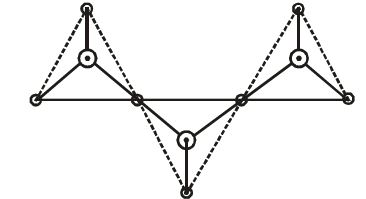
Formula of the following silicate anion structure is, where $ \bullet $ $ -'Si'$ atom,  $o-'O'$ atom
For reaction

$Cl_2(aq) + H_2S(aq) \to S(s) + 2H^+(aq) + 2Cl^-(aq)$ rate law is $r = K[Cl_2][H_2S]$
then which of these mechanism is/are consistent with this rate law

$(A)\, H_2S \rightleftharpoons  H^+ + HS^-$ (fast)

         $Cl_2 + HS^-\to 2Cl^-+ H^+ + S$ (slow)

$(B)\, Cl_2 + H_2S \to H^+ + Cl^-+ Cl^+ + HS^-$ (slow)

          $Cl^+ + HS^-\to H^+ + Cl^-+ S$ (fast)

The highest electrical conductivity of the following aqueous solutions is of
At $320\,K,$ a gas $A_2$ is $20\%$  dissociated to $A(g).$ The standard free energy change at  $320\,K$  and $1\,atm$   in $J\,mo1^{-1}$  is approximately

$(R= 8.314\,\,JK^{-1}\,\,mol^{-1};\,\,ln\,2 = 0.693;\,\,ln\,3 = 1.098)$