MCQ
The image formed by a spherical mirror is virtual. The mirror will be:
  • A
    Concave.
  • B
    Convex.
  • C
    Either concave or convex.
  • D
    Metallic.

Answer

  1. Convex.

Explanation:

A convex mirror always forms a virtual image.

Need a full question paper?

Generate a complete, print-ready paper with questions like this in minutes — across 16+ boards, with answer keys.
Start Generating Free

Similar questions

The focal length of concave lens required to correct myopia is:
The real image formed by a concave mirror is smaller than the object if the object is:
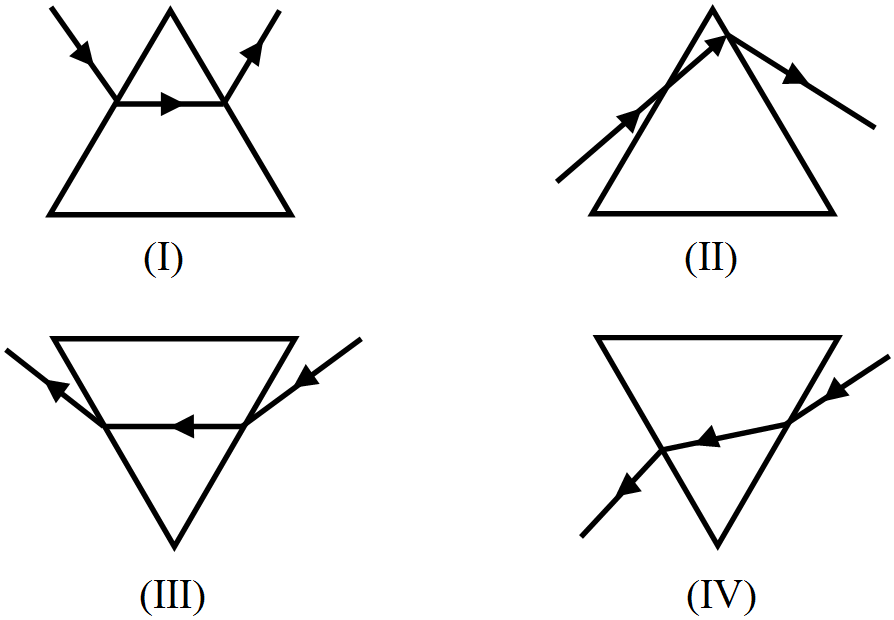
While performing the experiment to trace the path of a ray of light passing through a glass prism, four students marked the incident ray and the emergent ray in their diagrams in the manner shown below:
A student is observing the diagram showing the path of a ray of light passing through a glass prism. He would find that for all angles of incidence the ray of light bends:
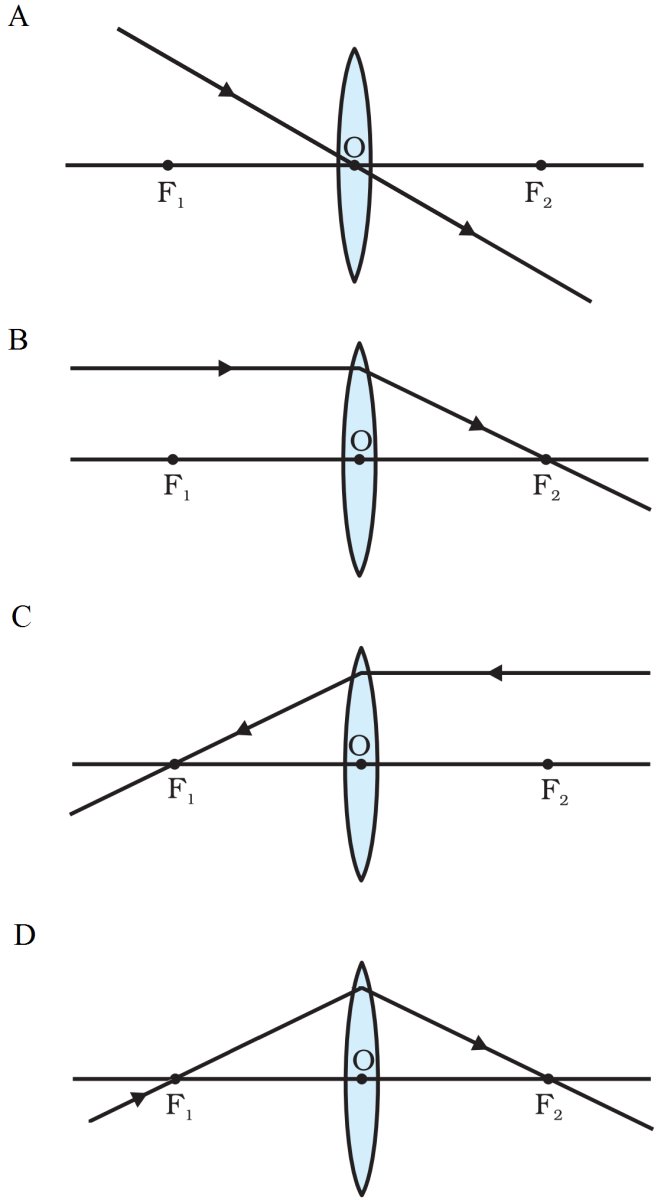
Study the following ray diagrams:
To determine the focal length of a convex lens by obtaining a sharp image of a distant object,the following steps were suggested which are not in proper sequence:
  1. Hold the lens between the object and the screen.
  2. Adjust the position of the lens to form sharp image.
  3. Select a suitable distant object.
  4. Measure the distance between the lens and the screen.
The correct sequence of steps to determine the focal length of the lens is:
Coulomb is the SI unit of:
Consider the following properties of virtual images:

  1. Cannot be projected on the screen.
  2. Are formed by both concave and convex lens.
  3. Are always erect.
  4. Are always inverted.

The correct properties are:

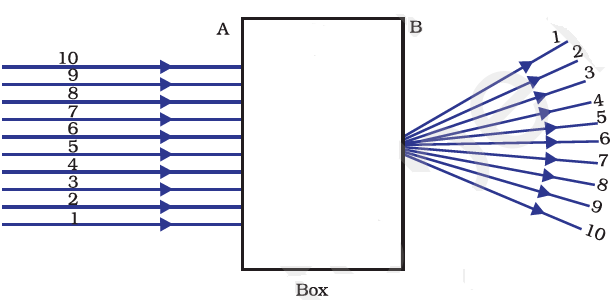
A beam of light is incident through the holes on side A and emerges out of the holes on the other face of the box as shown in the Figure. Which of the following could be inside the box?
f the amount of electric charge passing through a conductor in 10 minutes is 300C, the current flowing is:
  1. 30A.
  2. 0.3A.
  3. 0.5A.
  4. 5A.