Question
The intensity maxima due to two interfering waves of equal amplitude $a_1=a_2=a$ is $4 a^2$. Does this violate the law of conservation of energy? Justify.

Answer

No, The average intensity of maxima and minima will be, $\text{I}_{\text{av}}=\frac{4\text{a}^2+0}{2}=2\text{a}^2,$ which is the sum of their intensities.
So, energy conservation is obeyed, but redistribution of energy has taken place.

Need a full question paper?

Generate a complete, print-ready paper with questions like this in minutes — across 16+ boards, with answer keys.
Start Generating Free

Similar questions

A semicircular wire of radius 5.0cm carries a current of 5.0A. A magnetic field B of magnitude 0.50T exists along the perpendicular to the plane of the wire. Find the magnitude of the magnetic force acting on the wire.
It is a common observation that rain clouds can be at about a kilometre altitude above the ground.A typical rain drop is about 4mm diameter. Momentum is mass x speed in magnitude. Estimate its momentum when it hits ground.
The changes in a function y and the independent dy variable x are related as $\frac{\text{dy}}{\text{dx}}=\text{x}^2.$ Find y as a function of x.
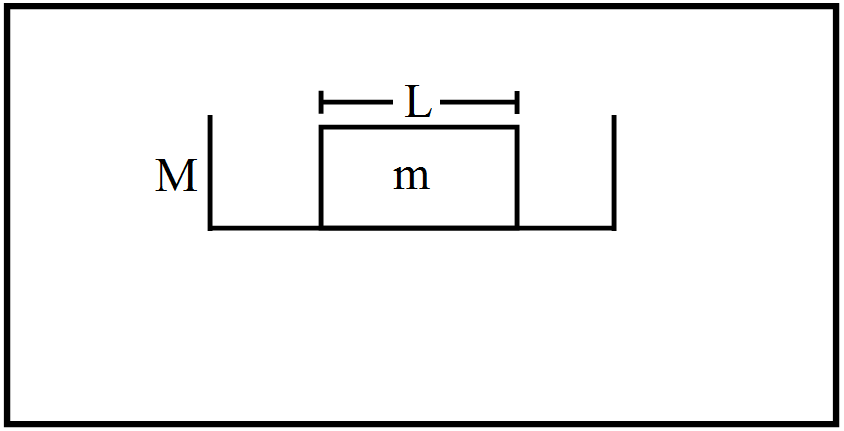
Consider a gravity-free hall in which a tray of mass M, carrying a cubical block of ice of mass m and edge L, is at rest in the middle. If the ice melts, by what distance does the centre of mass of "the tray plus the ice" system descend?
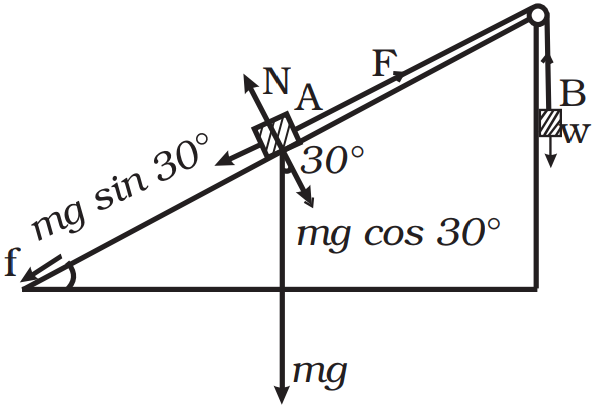
Block A of weight 100N rests on a frictionless inclined plane of slope angle 30° A flexible cord attached to A passes over a frictonless pulley and is connected to block B of weight W. Find the weight W for which the system is in equilibrium.
A circular loop of one turn carries a current of 5.00A. If the magnetic field B at the centre is 0.200mT find the radius of the loop.
Equal masses of monoatomic and diatomic gases are supplied heat at the same temperature, pressure and volume. If same amount of heat is supplied to both the gases, which of them will undergo greater temperature rise?
The displacement of a particle is given by $at^2$. What is dependency of acceleration on time?
What do you mean by compressibility? Why are solids least compressible and gases most compressible?
Prove that when there is an angle $\frac{2}{3} \pi$ between two vectors of equal magnitude, then the magnitude of resultant vector will be equal to the magnitude of one of the vectors.