MCQ
The limiting value of static friction between two contact surfaces is ........... 
  • A
    Proportional to normal force between the surface in contact
  • B
    Independent of apparent area of contact
  • C
    Depends on the microscopic area of contact
  • All of these

Answer

Correct option: D.
All of these
d
(d)

Need a full question paper?

Generate a complete, print-ready paper with questions like this in minutes — across 16+ boards, with answer keys.

Start Generating Free

Similar questions

A rod of length $3\, m$ and its mass per unit length is directly proportional to the distance $x$ from its one end. The center of gravity of the rod from that end will be at ........ $ m$
A current $i$ flows in a circular coil of radius $r$. If the coil is placed in a uniform magnetic field $B$ with its plane parallel to the field, magnitude of the torque that acts on the coil is
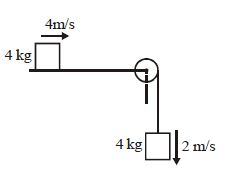
Two blocks of same mass $(4\ kg)$ are placed according to diagram. Initial velocities of bodies are $4\ m/s$ and $2\ m/s$ and the string is taut. Find the impulse on $4\ kg$ when the string again becomes taut  .......... $N-s$
The operation of a nuclear reactor is said to be critical, if the multiplication factor $(K)$ has a value
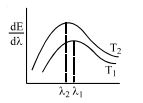
The spectral emissive power $E_\lambda $ for a body at temperature $T_1$ is plotted against the wavelength and area under the curve is found to be $A$. At a different temperature $T_2$ the area is found to be $9A$. Then $\lambda _1/\lambda _2 =$
The ratio of the energy of an $X-$ ray photon of wavelength $1 Å$ to that of visible light of wavelength $5000 Å$ is
A particle of mass $m$ moves in a circular orbit in a central potential field $U\left( r \right) = \frac{1}{2}k{r^2}$. If Bohr’s quantization conditions are applied, radii of possible orbits and energy levels vary with quantum number $n$ as
An air bubble of diameter $6\,mm$ rises steadily through a solution of density $1750\,kg / m ^3$ at the rate of $0.35\,cm / s$. The co-efficient of viscosity of the solution (neglect density of air) is $..........\,Pas$ (given, $g =10\,ms ^{-2}$)
In a thermodynamics process, pressure of a fixed mass of a gas is changed in such a manner that the gas releases $20 J$ of heat and $8J$ of work is done on the gas. If the initial internal energy of the gas was $30J.$ The final internal energy will be ...... $J$
The materials suitable for making electromagnets should have