MCQ
The magnetic susceptibility is
  • $x=\frac{1}{H}$
  • B
    $x=\frac{B}{H}$
  • C
    $x =\frac{ M }{ V }$
  • D
    $x=\frac{M}{H}$

Answer

Correct option: A.
$x=\frac{1}{H}$
$x=\frac{1}{H}$

Need a full question paper?

Generate a complete, print-ready paper with questions like this in minutes — across 16+ boards, with answer keys.

Start Generating Free

Similar questions

When the speed of a dc motor increases the armature current(a) Increases(b) Decreases(c) Does not change(d) Increases and decreases continuously


The dielectric constant of a metal is :
If the potential difference applied to the tube is doubled and the separation between the filament and the target is also doubled, the cutoff wavelength:
  1. Will remain unchanged.
  2. Will be doubled.
  3. Will be halved.
  4. Will become four times the original.
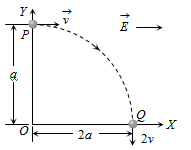
A particle of charge $+q$ and mass $m$ moving under the influence of a uniform electric field  $Eî$ and a uniform magnetic field $B \hat{k}$  follows trajectory from $P$ to $Q$ as shown in figure. The velocities at $P$ and $Q$ are $v^{\hat{1}}$ and -$-2 v^{\hat{\jmath}}$ respectively. Which of the following statement$(s)$ is/are correct
27 small drops of water with equal radius and equal charge comprised to form one big drop. The ratio of capacitance of a big drop and capacitance of a small drop will be:
Two files lines can ____.
In a PN-junction(a) P and N both are at same potential(b) High potential at N side and low potential at P side(c) High potential at P side and low potential at N side(d) Low potential at N side and zero potential at P side


The magnetic field at the centre of a current carrying loop is B and its area is A. Magnetic moment of the loop will be :
Which of the following is true (a) Common base transistor is commonly used because current gain is maximum(b) Common emitter is commonly used because current gain is maximum(c) Common collector is commonly used because current gain is maximum (d) Common emitter is the least used transistor


Assertion  :   Self-inductance is called the inertia of electricity.
Reason      : Self-inductance is the phenomenon, according to which an opposing induced e.m.f. is produced in a coil as a result of change in current or magnetic flux linked in the coil.(a) If both assertion and reason are true and the reason is the correct explanation of the assertion.(b) If both assertion and reason are true but reason is not the correct explanation of the assertion.(c) If assertion is true but reason is false.(d) If the assertion and reason both are false.