MCQ
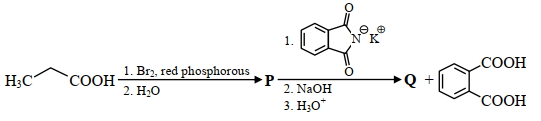
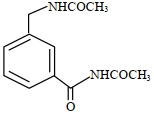
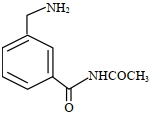
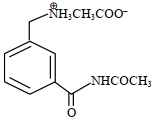
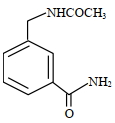
The major product in the above reaction is:

- A
- B
- C
- ✓

Generate a complete, print-ready paper with questions like this in minutes — across 16+ boards, with answer keys.
(Nearest integer)
[Use : Molal Freezing point depression constant of water $\left.=1.86 \,\mathrm{~K} \,\mathrm{~kg} \,\mathrm{~mol}^{-1}\right]$
Freezing Point of water $=273\, \mathrm{~K}$
Atomic masses : $\mathrm{C}: 12.0\, \mathrm{u}, \mathrm{O}: 16.0\, \mathrm{u}, \mathrm{H}: 1.0\, \mathrm{u}]$

$\mathrm{Cr}_2 \mathrm{O}_7{ }^{2-}+14 \mathrm{H}^{+}+6 \mathrm{e}^{-} \rightarrow 2 \mathrm{Cr}^{3+}+7 \mathrm{H}_2 \mathrm{O}, \mathrm{E}^{\circ}=1.33 \mathrm{~V}$
$\mathrm{Fe}^{3+}(\mathrm{aq})+3 \mathrm{e}^{-} \rightarrow \mathrm{Fe} \mathrm{E}^{\circ}=-0.04 \mathrm{~V}$
$\mathrm{Ni}^{2+}(\mathrm{aq})+2 \mathrm{e}^{-} \rightarrow \mathrm{Ni} \mathrm{E}^{\circ}=-0.25 \mathrm{~V}$
$\mathrm{Ag}^{+}(\mathrm{aq})+\mathrm{e}^{-} \rightarrow \mathrm{Ag} \mathrm{E}^{\circ}=0.80 \mathrm{~V}$
$\mathrm{Au}^{3+}(\mathrm{aq})+3 \mathrm{e}^{-} \rightarrow \mathrm{Au} \mathrm{E}^{\circ}=1.40 \mathrm{~V}$
Consider the given electrochemical reactions, The number of metal$(s)$ which will be oxidized be $\mathrm{Cr}_2 \mathrm{O}_7{ }^{2-}$, in aqueous solution is. . . . . .
$(A)$ $P$ can be reduced to a primary alcohol using $NaBH _4$.
$(B)$ Treating $P$ with conc. $NH _4 OH$ solution followed by acidification gives $Q$.
$(C)$ Treating $Q$ with a solution of $NaNO _2$ in aq. $HCl$ liberates $N _2$.
$(D)$ $P$ is more acidic than $CH _3 CH _2 COOH$.