MCQ
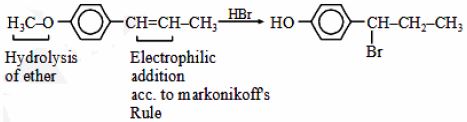
The major product in the following conversion is

- A
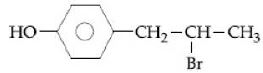
- ✓
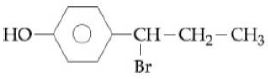
- C
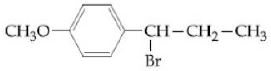
- D
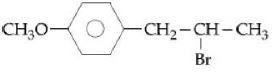
Generate a complete, print-ready paper with questions like this in minutes — across 16+ boards, with answer keys.
$| Pt(s)$ At $298\ K$, $E^o_{cell}$ for cell is $- 2.31\ V$ , what will be the $E_{cell}$ at $pH = 1$ ? ........... $\mathrm{Volt}$
$(I)\,\begin{array}{*{20}{c}}
{C{H_3}CHC{H_2}C{H_3}} \\
{|\,\,\,\,\,\,\,\,\,\,\,} \\
{Cl\,\,\,\,\,\,\,\,\,}
\end{array}$
$(II)\,CH_3CH_2CH_2Cl$
$(III)\,H_3CO-C_6H_4-CH_2Cl$
$(a)\;\left(\mathrm{CH}_{3}\right)_{3} \mathrm{CCH}(\mathrm{OH}) \mathrm{CH}_{3} \stackrel{\mathrm{conc.H}, \mathrm{SO}_{4}}{\longrightarrow}$
$(b)\;\left(\mathrm{CH}_{3}\right)_{2} \mathrm{CHCH}(\mathrm{Br}) \mathrm{CH}_{3} \stackrel{\text { alc.KOH }}{\longrightarrow}$
$(c)\;\left(\mathrm{CH}_{3}\right)_{2} \mathrm{CHCH}(\mathrm{Br}) \mathrm{CH}_{3} \xrightarrow[\text { It should be }\left(\mathrm{CH}_{3}\right)_{3} \mathrm{CO}^{-} \mathrm{K}^{+}]{\text { given by } \mathrm{NTA}\left(\mathrm{CH}_{3}\right)_{3} \mathrm{O}^{-} \mathrm{K}^{+}}$
$(d)\;\begin{array}{*{20}{c}}
{{{(C{H_3})}_2}C - C{H_2} - CHO} \\
{|\,\,\,\,\,\,\,\,\,\,\,\,\,\,\,\,\,\,} \\
{OH\,\,\,\,\,\,\,\,\,\,\,\,\,\,}
\end{array}\xrightarrow{\Delta }$
Which of these reaction(s) will not produce Saytzeff product ?
Reason : Covalency of oxygen is two.