MCQ
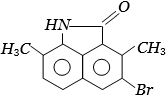
The major product obtained when $B{r_2}/Fe$ is treated with is
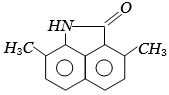
- ✓
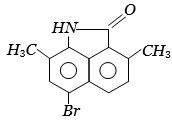
- B
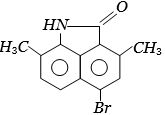
- C
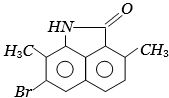
- D
Generate a complete, print-ready paper with questions like this in minutes — across 16+ boards, with answer keys.
| List - I (Carbohydrate) | List - II (Linkage Source) |
| (A) Amylose | (I) $\quad \beta- C _1- C _4$, plant |
| (B) Cellulose | (II) $\alpha- C _1- C _4$, animal |
| (C) Glycogen | (III) $\alpha- C _1- C _4$, $\alpha- C _1- C _6$, plant |
| (D) Amylopectin | (IV) $\alpha- C _1- C _4$, plant |
Consider the above reaction. The percentage yield of amide product is ...... . (Round off to the Nearest Integer). (Given : Atomic mass : $C : 12.0\, u , H : 1.0 \,u,N : 14.0\, u , O : 16.0\, u , Cl : 35.5\, u )$

| Experiment No. | $\begin{array}{c}{[ A ]} \\ \left( mol dm ^{-3}\right)\end{array}$ | $\begin{array}{c}{[ B ]} \\ \left( mol dm ^{-3}\right)\end{array}$ | $\begin{array}{c}{[ C]} \\ \left( mol dm ^{-3}\right)\end{array}$ | Rate of reaction $\left( mol dm ^{-3} s ^{-1}\right)$ |
| $1$ | $0.2$ | $0.1$ | $0.1$ | $6.0 \times 10^{-5}$ |
| $2$ | $0.2$ | $0.2$ | $0.1$ | $6.0 \times 10^{-5}$ |
| $3$ | $0.2$ | $0.1$ | $0.2$ | $1.2 \times 10^{-4}$ |
| $4$ | $0.3$ | $0.1$ | $0.1$ | $9.0 \times 10^{-5}$ |
The rate of the reaction for $[ A ]=0.15 mol dm ^{-3},[ B ]=0.25 mol dm ^{-3}$ and $[ C ]=0.15 mol dm ^{-3}$ is found to be $Y \times 10^{-5} mol dm d ^{-3} s ^{-1}$. The value of $Y$ i. . . . . . .
$1-$ Bromopropane is reacted with reagents in List $I$ to give product in List $II$
| List$I-$ Reagent | List$II-$Product |
| $A$ $KOH (\text { alc) }$ | $I$ Nitrile |
| $B$ $KCN \text { (alc) }$ | $II$ Ester |
| $C$ $AgNO _2$ | $III$ Alkene |
| $D$ $H _3 CCOOAg$ | $IV$ Nitroalkane |