MCQ
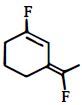
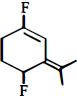
The most polar compound among the following is
  • A

  • B


  • D

Answer

Correct option: C.

c
Among the substituents attached to the given compounds, fluorine has maximum electronegativity. So it will push electron pair towards it self. In option $(b),$  the two $F$ groups are attached opposite to each other thus net dipole moment will cancel each other and reduce its polarity. In option $(d),$  the $F$ groups are attached in slightly opposite direction thus this also decreases its polarity. But in option $(c),$  the compound has the two $F$  groups along same direction. Thus net dipole moment will increase in this direction thus it will have maximum polarity. Thus the compound in option $(c)$  has maximum polarity

Need a full question paper?

Generate a complete, print-ready paper with questions like this in minutes — across 16+ boards, with answer keys.

Start Generating Free

Similar questions

Which is the major constituent of gun powder?
Which group of elements does not show diagonal relationship?
Which of the following compound undergoes disproportionation in presence of $SO_3$ gas ?
Choose the correct code of characteristics for the given order of hybrid orbitals of same atom,
                                 $sp < sp^2 < sp^3$
$(i)$ Electronegativity      $(ii)$ Bond angle between same hybrid orbitals

$(iii)$ Size                        $(iv)$ Energy level

Name the two types of chromatography techniques based on the principle of differential adsorption.
Which statement is correct with respect to the property of the elements with increase in atomic number in the carbon family?
Which substance is serving as a reducing agent in the following reaction $14{H^ + } + C{r_2}O_7^{2 - } + 3Ni \to 2C{r^{3 + }} + 7{H_2}O + 3N{i^{2 + }}$
For a sparingly soluble salt ${A_p}{B_q},$ the relationship of its solubility product $({L_S})$ with its solubility $(S)$ is
Different hydrogen in the compound are represented by alphabets :
$\mathop {\mathop {C{H_3}}\limits_{(A)}  - CH}\limits_{\,\,\,\,\,\,\,\,\,\,\,\,\,\,\,\,\,\,\,\,\,\,\,\,}  = \mathop {CH}\limits_{(B)}  - \mathop {C{H_2}}\limits_{(C)}  - \mathop {C{H_2}}\limits_{(D)}  - \mathop {CH}\limits_{(E)} \mathop {{{\left( {C{H_3}} \right)}_2}}\limits_{(F)} $
arrange them in decreasing order of reactivity towards free radical substitution
What is the characteristic of a material which undergo spontaneous combustion?