MCQ
The most stable ion is
  • A
    $[Fe(C_2O_4)_3]^{3-}$
  • $[Fe(CN)_6]^{3-}­$
  • C
    $[Fe(CN)_6]^{4-}$
  • D
    $[Fe(H_2O)_6]^{3+}$

Answer

Correct option: B.
$[Fe(CN)_6]^{3-}­$
b
Among the given complexes the most stable is $\left[ Fe ( CN )_6\right]^{3-}$ because only this complex is forming a inner orbital complex because of the presence of a strong field ligand and its hybridization is $d^2 s p^3$ while rest of the complexes forms a outer orbital complex which are less stable in comparison.

Need a full question paper?

Generate a complete, print-ready paper with questions like this in minutes — across 16+ boards, with answer keys.

Start Generating Free

Similar questions

Which of the following statements is not true according to collision theory of reaction rates
Which of the following statement(s) is/are correct with reference to $Fe^{2+}$ and $Fe^{3+}$ ions ?

$(1)$ $Fe^{3+}$ gives brown colour with potassium ferricyanide

$(2)$ $Fe^{2+}$ gives blue colour with potassium ferricyanide

$(3)$ $Fe^{3+}$ gives red colour with potassium thiocyanate

$(4)$ $Fe^{2+}$ gives brown colour with ammonium thiocyanate
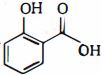
The $IUPAC$ name of (figure) is
For $N{H_4}H{S_{\left( s \right)}} \rightleftharpoons N{H_3}_{\left( g \right)} + {H_2}{S_{\left( g \right)}}$; observed pressure for reaction mixture at equilibrium is $1.12\, atm$ at $106\,^oC$. The value of $K_P$ for the reaction is
Amongst the following the total number of species having eight electrons around central atom in its outer most shell, is: $NH _3, AlCl _3, BeCl _2, CCl _4, PCl _5$, $CO _2$
The successive ionisation energy values for an element $X$ are given below element $X$ belongs to group :-
$A. 1^{st}$ ionisation energy $= 410\, kJ\, mol^{-1}$
$B. 2^{nd}$ ionisation energy $= 820\, kJ\, mol^{-1}$
$C. 3^{rd}$ ionisation energy $= 1100\, kJ\, mol^{-1}$
$D. 4^{th}$ ionisation energy $= 1500\, kJ\, mol^{-1}$
$E. 5^{th}$ ionisation energy $= 3200\, kJ\, mol^{-1}$
Consider the following statements :-

$(i)$ Increase in concentration of reactant increases the rate of a zero order reaction

$(ii)$ Rate constant $k$ is equal to $'A'$ if $E_a = 0$

$(iii)$ Rate constant $k$ is equal to $'A'$ if $E_a = \infty$

$(iv)$ $log_e k$  vs  $T$ is a straight line

$(v)$ $log_ek$  vs   $1/T$ is straight line
Correct statement are

If ${N_x}$ is the number of bonding orbitals of an atom and ${N_y}$ is the number of antibonding orbitals, then the molecule/atom will be stable if
If energy absorbed for conversion of $M_{(g)}$ into $M_{(g)}^+$ for $Li, Be, B, C$ and $N$ is $a, b, c, d$ and $e$ (in $k\,cal/ mol$) respectively then correct order will be
The freezing point of benzene decreases by $0.45^o C$ when $0.2\,g$ of acetic acid is added to $20\, g$ of benzene. If acetic acid associates to form a dimer in benzene, percentage association of acetic acid in benzene will be .......... $\%$

$(K_f $ for benzene $= 5.12 \,K\, kg\, mol^{-1})$