MCQ
The pair that has similar atomic radii is
  • A
    $Ti$ and $Hf$
  • B
    $Mn$ and $Re$
  • C
    $Sc$ and $Ni$
  • $Mo$ and $W$

Answer

Correct option: D.
$Mo$ and $W$
d
Due to lanthanoide contraction $Mo$ and $W$ have similar atomic radii.

Need a full question paper?

Generate a complete, print-ready paper with questions like this in minutes — across 16+ boards, with answer keys.
Start Generating Free

Similar questions

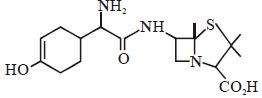
How many functional groups are in following molecule
The standard enthalpy of formation $(\Delta _fH^o)$ at $298\, K$ for methane, $CH_4(g)$ is $-74.8 \,kJ \,mol^{-1}.$ The additional information required to determine the average energy for $C- H$ bond formation would be
If the nitrogen atom had electronic configuration $1s^7,$ it would have energy lower than of the normal ground state configuration $1s^2 ,2s^2 ,2 p^3$ because the electron would be closer to the nucleus. Yet $1s^7$ is not observed because it violates
The $IUPAC$ name of $\begin{matrix}
   C{{H}_{3}}\,\,\,\,\,\,\,\,\,\,\,\,\,\,\,\,\,\,\,\,\,\,\,\,\,\,\,\,\,\,\,\,\,\,\,\,\,\,\,\,\,\,  \\
   |\,\,\,\,\,\,\,\,\,\,\,\,\,\,\,\,\,\,\,\,\,\,\,\,\,\,\,\,\,\,\,\,\,\,\,\,\,\,\,\,\,\,\,\,\,\,\,\,  \\
   C{{H}_{3}}-C-CH-CH-C{{H}_{2}}-C{{H}_{3}}  \\
   |\,\,\,\,\,\,\,\,\,|\,\,\,\,\,\,\,\,\,\,\,\,|\,\,\,\,\,\,\,\,\,\,\,\,\,\,\,\,\,\,\,\,\,\,\,\,\,  \\
   C{{H}_{3}}\,\,C{{H}_{3}}\,\,\,\,\,I\,\,\,\,\,\,\,\,\,\,\,\,\,\,\,\,\,\,\,\,\,\,\,\,\,\,\,  \\
\end{matrix}$ is
$C_2H_2$ is isostructural with
The maximum number of electrons in an atom with $l = 2$ and $n = 3$ is
Given below are two statements: one is labelled as Assertion $(A)$ and the other is labelled as Reason $(R).$

Assertion $(A) :$ Treatment of bromine water with propene yields $1-$bromopropan$-2-$ol.

Reason $(R):$ Attack of water on bromonium ion follows Markovnikov rule and results in $1-$bromopropan$-2-$ol.

In the light of the above statements, choose the most appropriate answer from the options given below:

The oxidation states of $S-$ atoms in caro's and marshal's acid are
An element belongs to $3^{rd}$ period and group $-13$ of the periodic table. Which of the following properties will be shown by the element?
$HCl$ does not show peroxide effect since
$C{{H}_{3}}-CH=C{{H}_{2}}+\overset{\centerdot }{\mathop{X}}\,\to C{{H}_{3}}-\overset{\centerdot }{\mathop{C}}\,H-C{{H}_{2}}X$ $(I)$
$C{{H}_{3}}-\overset{\centerdot \,\,\,\,}{\mathop{CH}}\,-C{{H}_{2}}X+H-X\to C{{H}_{3}}-C{{H}_{2}}-C{{H}_{2}}X+\overset{\centerdot }{\mathop{X}}\,$  $(II)$