MCQ
The penetrating power of X-rays depends upon :
- ✓the velocity of these rays
- Bcurrent in the tube
- Cintensity of the rays
- Dnature of the cathode
Generate a complete, print-ready paper with questions like this in minutes — across 16+ boards, with answer keys.
If a high power heater is connected to electric mains, then the bulbs in the house become dim, because there is a
|
(a) Current drop |
(b) Potential drop |
(c) No current drop |
(d) No potential drop |
A charge q coulomb moves in a circle at n revolutions per second and the radius of the circle is r metre. Then magnetic field at the centre of the circle is
|
(a) |
(b) |
|
(c) |
(d) |
Wave which cannot travel in vacuum is
|
(a) X-rays |
(b) Infrasonic |
(c) Ultraviolet |
(d) Radiowaves |
The distance between the circular plates of a parallel plate condenser 40mm in diameter, in order to have same capacity as a sphere of radius 1 metre is
|
(a) 0.01 mm |
(b) 0.1 mm |
(c) 1.0 mm |
(d) 10 mm |
The energy stored in the condenser is
|
(a) QV |
(b) |
(c) |
(d) |
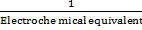
According to Faraday's laws of electrolysis, the amount of decomposition is proportional to
|
(a) |
(b) Electrochemical equivalent of the substance |
|
(c) |
(d) |