MCQ
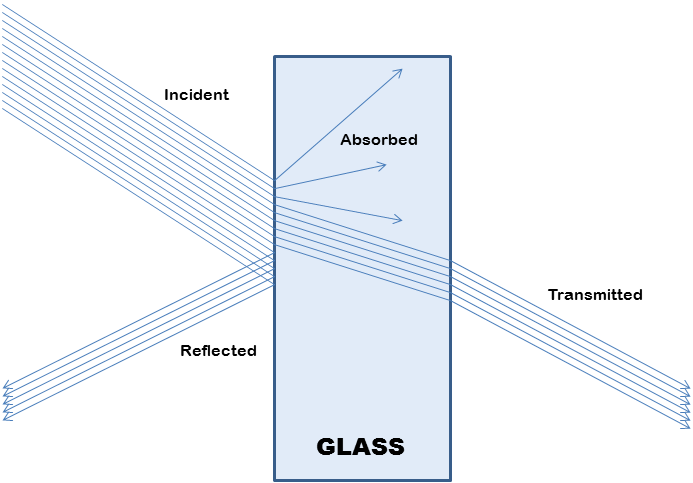
The phenomenon of light passing through the object is called:
- AReflection
- BRefraction
- CDispersion
- DTotal internal reflection
The phenomenon of light passing through the object is called:
Explanation:
The phenomena when light passes through the object (a medium) is known as refraction. Refraction is defined as the bending of light ray when it passes from one medium to another.
Generate a complete, print-ready paper with questions like this in minutes — across 16+ boards, with answer keys.
The phenomenon of radioactivity is
|
(a) Exothermic change which increases or decreases with temperature |
|
(b) Increases on applied pressure |
|
(c) Nuclear process does not depend on external factors |
|
(d) None of the above |
On increasing the reverse bias to a large value in a PN-junction diode, current
| (a) Increases slowly | (b) Remains fixed |
(c) Suddenly increases |
(d) Decreases slowly |
The de-Broglie wavelength l
|
(a) is proportional to mass |
(b) is proportional to impulse |
|
(c) Inversely proportional to impulse |
(d) does not depend on impulse |
In electromagnetic induction, the induced charge in a coil is independent of
|
(a) Change in the flux |
(b) Time |
|
(c) Resistance in the circuit |
(d) None of the above |
In Young’s double slit experiment, the distance between the two slits is made half, then the fringe width will become
|
(a) Half |
(b) Double |
(c) One fourth |
(d) Unchanged |
In a potentiometer experiment, the galvanometer shows no deflection when a cell is connected across 60 cm of the potentiometer wire. If the cell is shunted by a resistance of 6Ω, the balance is obtained across 50 cm of the wire. The internal resistance of the cell is
|
(a) 0.5 Ω |
(b) 0.6 Ω |
(c) 1.2 Ω |
(d) 1.5 Ω |