MCQ
The process that is $NOT$ endothermic in nature is :-
  • A
    $Ar _{( g )}+ e ^{-} \rightarrow Ar _{( g )}^{-}$
  • $H _{( g )}+ e ^{-} \rightarrow H _{( g )}^{-}$
  • C
    $Na _{( g )} \rightarrow Na _{( g )}^{+}+ e ^{-}$
  • D
    $O _{( g )}^{-}+ e ^{-} \rightarrow O _{( g )}^{2-}$

Answer

Correct option: B.
$H _{( g )}+ e ^{-} \rightarrow H _{( g )}^{-}$
b
$H _{( g )}+ e ^{-} \rightarrow H ^{-} \quad$ is exothermic rest of all endothermic process.

Need a full question paper?

Generate a complete, print-ready paper with questions like this in minutes — across 16+ boards, with answer keys.

Start Generating Free

Similar questions

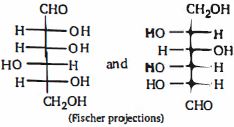
What is the relationship between the molecules in the following pairs ?
In an oxidation process, oxidation number
${C_2}{H_2}\xrightarrow[{1\% \,HgS{O_4}}]{{dil.\,{H_2}S{O_4}}}A\xrightarrow{{\left[ O \right]}}B\xrightarrow{{NaOH}}C\xrightarrow{{NaOH/CaO}}D$, $[D]$ is
In Kjeldahl’s method for estimation of nitrogen, $C_uSO_4$ acts as :
Number of moles of $KMnO_4$ reduced by $1\,mol$ $I^-$ in basic medium is
In which of the following pair both the species have $sp^3$ hybridization?
The correct order of $S-S$ bond length in following oxyanions is

$(I)$ $S_2O_4^{2-}$   $(II)$ $S_2O_5^{2-}$    $(III)$ $S_2O_6^{2-}$

In the process, $O_2^ + \to O_2^{ + 2} + e^-$ the electron lost is from
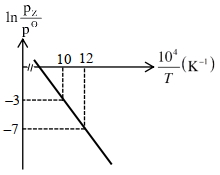
For the reaction $X ( s ) \rightleftharpoons Y ( s )+ Z ( g )$, the plot of $\ln \frac{ p _z}{ p ^\theta}$ versus $\frac{10^4}{T}$ is given below (in solid line), where $p_z$ is the pressure (in bar) of the gas $Z$ at temperature $T$ and $P ^{\ominus}=1$ bar.

(Given, $\frac{ d (\ln K )}{ d \left(\frac{1}{T}\right)}=-\frac{\Delta H^{\ominus}}{ R }$, where the equilibrium constant, $K =\frac{ p _{ z }}{ p ^{\ominus}}$ and the gas constant, $R =8.314$ $\left.J K ^{-1} mol ^{-1}\right)$

($1$) The value of standard enthalpy, $\Delta H ^{\ominus}$ (in $kJ mol ^{-1}$ ) for the reaction is. . . . . . .

($2$) The value of $\Delta S^{\ominus}$ (in $J K ^{-1} mol ^{-1}$ ) for the given reaction, at $1000 K$ is. . . . . . 

Give the answer or quetin ($1$) and ($2$)
One of the constituent of german silver is