Question
The simplest rationalising factor of $\sqrt[3]{500},$ is:

Answer

  1. $\sqrt[3]{2}$
    Solution:
    $\sqrt[3]{500}=(500)^{\frac{1}{3}}=\Big(\frac{500\times2}{2}\Big)^{\frac{1}{3}}\\ \ =\Big(\frac{1000}{2}\Big)^{\frac{1}{3}}=(10^{\not3})^{\frac{1}{\not3}}.\frac{1}{2^{\frac{1}{3}}}\Rightarrow10.2^{\frac{-1}{3}}$
    The simplest Rationalisation factor of $\sqrt[3]{500}$
    After simplify it to $\Big(10.2^{\frac{-1}{3}}\Big)$ is $2^{\frac{1}{3}}$ or $\sqrt[3]{2}.$
    Hence, correct option is (a).

Need a full question paper?

Generate a complete, print-ready paper with questions like this in minutes — across 16+ boards, with answer keys.
Start Generating Free

Similar questions

Write the correct answer in the following:
The length of each side of an equilateral triangle having an area of $9\sqrt{3}\text{cm}^2$ is:
  1. 8cm
  2. 36cm
  3. 4cm
  4. 6cm
In a $\triangle\text{ABC},\angle\text{A}=50^\circ$ and BC is produced to a point D. If the bisectors of $\angle\text{ABC}$ and $\angle\text{ACD}$ meet at E, then $\angle\text{E}=$
The curved surface area of a right circular cylinder which just encloses a sphere of radius r is:
Which one of the following statements is true?
Look at the statements given below:
$i.$ A parallelogram and a rectangle on the same base and between the same parallels are equal in area.
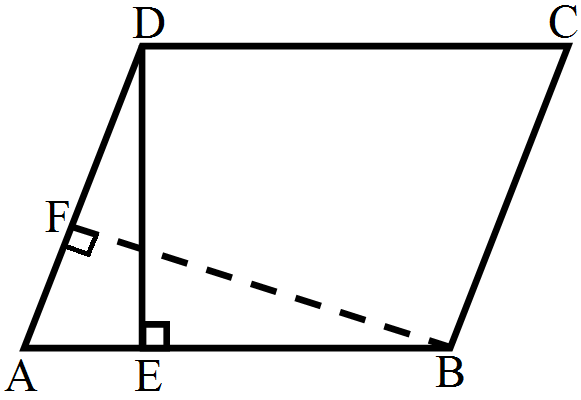
$ii.$ In a $\|gm \  \text{ABCD,}$ it is given that $AB = 10\ cm.$ The altitudes $DE$ on $AB$ and $BF$ on $AD$ being $6\ cm$ and $8\ cm$ respectively, then $AD = 7.5\ cm.$
$iii.$ Area of a $\|gm =\frac{1}{2}\times\text{base}\times\text{altitude}.$
Which is true?
A bag contains 16 cards bearing numbers 1, 2, 3, ..., 16 respectively. One card is chosen at random. What is the probability that the chosen card bears a number divisible by 3?
  1. $\frac{3}{16}$
  2. $\frac{5}{16}$
  3. $\frac{11}{16}$
  4. $\frac{13}{16}$
A linear equation in two variables x and y is of the form ax = by + c = 0, where:
  1. $\text{a}\neq0,\ \text{b}\neq0$
  2. $\text{a}\neq0,\ \text{b}=0$
  3. $\text{a}=0,\ \text{b}\neq0$
  4. $\text{a}=0,\ \text{c}=0$
The value of $0.\overline{2}$ in the form $\frac{\text{p}}{\text{q}},$ where p and q are integers and $\text{q}\neq0,$ is:
  1. $\frac{1}{5}$
  2. $\frac{2}{9}$
  3. $\frac{2}{5}$
  4. $\frac{1}{8}$
Pythagoras was a student of: