MCQ
The solution of $\frac{{dy}}{{dx}} + \frac{y}{3} = 1$ is
  • A
    $y = 3 + c{e^{x/3}}$
  • $y = 3 + c{e^{ - x/3}}$
  • C
    $3y = c + {e^{x/3}}$
  • D
    $3y = c + {e^{ - x/3}}$

Answer

Correct option: B.
$y = 3 + c{e^{ - x/3}}$
b
(b) Given, $\frac{{dy}}{{dx}} + \frac{y}{3} = 1$; $I.F.$ = ${e^{\int {\frac{1}{3}\,d\,x} }} = {e^{x/3}}$

Hence, solution is $y\,.\,{e^{x/3}} = \int {1\,.\,{e^{x/3}}\,dx + c} $

$y\,.\,{e^{x/3}} = 3\,{e^{x/3}} + c$; $y = 3 + c{e^{ - x/3}}$.

Need a full question paper?

Generate a complete, print-ready paper with questions like this in minutes — across 16+ boards, with answer keys.

Start Generating Free

Similar questions

If $y = {x^{\sqrt x }},$then ${{dy} \over {dx}} =$
If $A = \left| {\,\begin{array}{*{20}{c}}1&1&1\\a&b&c\\{{a^3}}&{{b^3}}&{{c^3}}\end{array}\,} \right|,B = \left| {\,\begin{array}{*{20}{c}}1&1&1\\{{a^2}}&{{b^2}}&{{c^2}}\\{{a^3}}&{{b^3}}&{{c^3}}\end{array}\,} \right|,C = \left| {\,\begin{array}{*{20}{c}}a&b&c\\{{a^2}}&{{b^2}}&{{c^2}}\\{{a^3}}&{{b^3}}&{{c^3}}\end{array}\,} \right|,$ then which relation is correct
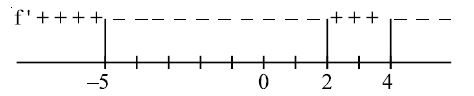
 $(i)$  $f (x)$ is continuous and defined for all real numbers

$(ii)$ $f '(-5) = 0 \,; \,f '(2)$ is not defined and $f '(4)  = 0$

$(iii)$ $(-5, 12)$ is a point which lies on the graph of $f (x)$

$(iv)$ $f ''(2)$ is undefined, but $f ''(x)$ is negative everywhere else.

$(v)$ the signs of  $f '(x)$ is given below

On the possible graph of $y = f (x)$ we have  
Two cards are drawn one by one from a pack of cards. The probability of getting first card an ace and second a coloured one is (before drawing second card first card is not placed again in the pack)
$\int_{}^{} {\frac{{{e^x}(x + 1)}}{{{{\cos }^2}(x{e^x})}}dx = } $
Which of the following is not correct for relation $\mathrm{R}$ on the set of real numbers ?
If $ |a|=|b| $ then $ (a+b).(a-b) $ is
Let $\alpha > 0$. If $\int \limits _0^\alpha \frac{ x }{\sqrt{ x +\alpha}-\sqrt{ x }} dx =\frac{16+20 \sqrt{2}}{15}$, then $\alpha$ is equal to :
The set points where the function f(x) given by $\text{f(x)=}|\text{x}-3|\cos\text{x}$ is  diffrentiable, is:
  1. R
  2. R - {3}
  3. $(0,\infty)$
  4. None of these.
$\int_{}^{} {{{\sin }^5}x{{\cos }^4}x\;dx = } $