MCQ
The splitting of white light into its constituent colours by a triangular prism is called ________?
  • A
    Dispersion
  • B
    Reflection
  • C
    Refraction
  • D
    Scattering

Answer

  1. Dispersion

Explanation:

The white light is separated into its component colors - red, orange, yellow, green, blue, indigo and violet.

The separation of visible light into its different colors is known as dispersion.

On passing through the prism, each colour of light ray is refracted by a different amount and hence, white light is split into its component colours.

Need a full question paper?

Generate a complete, print-ready paper with questions like this in minutes — across 16+ boards, with answer keys.
Start Generating Free

Similar questions

Following is true for Hypermetropia:
What is the minimum resistance which can be made using five resistors each of $\frac{1}{5}\Omega$.
The radiations present in sunlight which make a solar cooker work are:
  1. Visible light rays.
  2. Ultraviolet rays.
  3. Comic rays.
  4. Infrared rays.
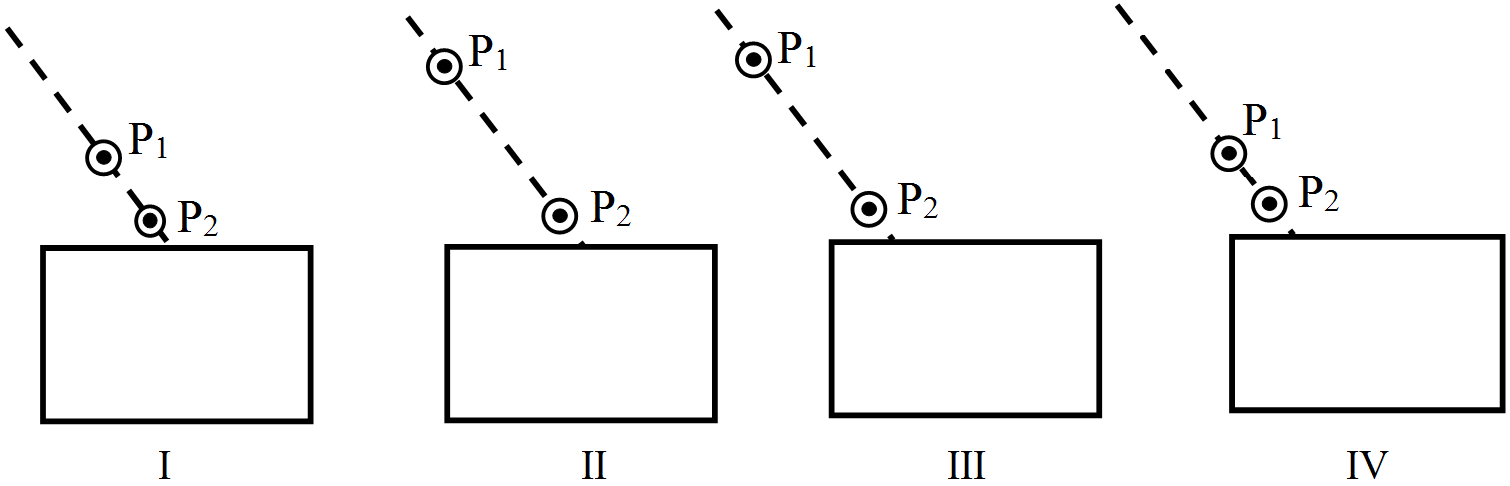
While performing the experiment on tracing the path of a ray of light through a rectangular glass slab, in which of the following experimental set-ups is a student likely to get best results? P1 and Pare the positions of pins fixed by him.
An electric generator converts:
  1. Electrical energy into mechanical energy.
  2. Mechanical energy into heat energy.
  3. Electrical energy into chemical energy.
  4. Mechanical energy into electrical energy.
An old person is unable to see clearly nearby objects as well as distant object. To correct the vision, what kind of lens will he require?
Three students A, B and C focussed a distant building on a screen with the help of a concave mirror. To determine focal length of the concave mirror they measured the distances as given below:
Student A : From mirror to the screen.
Student B : From building to the screen.
Student C : From building to the mirror.
Who measured the focal length correctly:
The size of the pupil of the eye is adjusted by:
  1. Cornea.
  2. Ciliary muscles.
  3. Optic nerve.
  4. Iris.
Variable focal length of eye is responsible for:
Though a woman can see the distant object clearly, she cannot see the nearby objects clearly. She is suffering from the defect of vision called:
  1. Long-sight.
  2. Short-sight.
  3. Hind-sight.
  4. Mid-sight.