MCQ
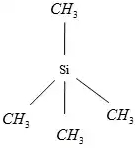
The structure and hybridisation of $Si{(C{H_3})_4}$ is
- ABent, $sp$
- BTrigonal, $s{p^2}$
- COctahedral, $s{p^3}d$
- ✓Tetrahedral, $s{p^3}$
Generate a complete, print-ready paper with questions like this in minutes — across 16+ boards, with answer keys.
$\mathrm{NaCl}+\mathrm{K}_{2} \mathrm{Cr}_{2} \mathrm{O}_{7}+\mathrm{H}_{2} \mathrm{SO}_{4}(\mathrm{Conc} .) \rightarrow(\mathrm{A})+$ Side products
$(\mathrm{A})+\mathrm{NaOH} \rightarrow(\mathrm{B})+$ side product
$(\mathrm{B})+\mathrm{H}_{2} \mathrm{SO}_{4}(\mathrm{dilute})+\mathrm{H}_{2} \mathrm{O}_{2} \rightarrow(\mathrm{C})+$ Side product
The sum of the total number of atoms in one molecule each of $(A), (B)$ and $(C)$ is
Sucrose $+$ $H _{2} O \rightleftharpoons$ Glucose $+$ Fructose
If the equilibrium constant $\left( K _{c}\right)$ is $2 \times 10^{13}$ at $300\, K$, the value of $\Delta_{ r } G^{\Theta}$ at the same temperature will be: