Question

The sun emits a light with maximum wavelength 510 mm while another star X emits a light with maximum wavelength of 350 nm. What is the ratio of surface temperature of sun and the star X

(a) 2.1

(b) 0.68

(c) 0.46

(d) 1.45

Answer

(b) 0.68

Need a full question paper?

Generate a complete, print-ready paper with questions like this in minutes — across 16+ boards, with answer keys.

Start Generating Free

Similar questions

Henry is the unit of :

A circular loop carrying a current is replaced by an equivalent magnetic dipole. A point on the axis of the loop is

(a) An end-on position

(b) A broad side-on position

(c) Both (a) and (b)

(d) Neither (a) nor (b)

Huygen wave theory allows us to know

(a) The wavelength of the wave

(b) The velocity of the wave     

(c) The amplitude of the wave

(d) The propagation of wave fronts

In ballistic galvanometer, the frame on which the coil is wound is non - metallic to:
The electric field intensity produced by the radiations coming from 100W bulb at a 3 m distance is E. The electric field intensity produced by the radiations coming from 50W bulb at the same distance is:

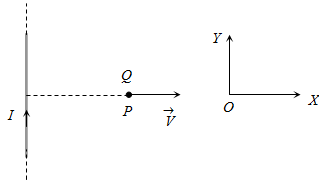
A very long straight wire carries a current I. At the instant when a charge +Q  at point P  has velocity , as shown, the force on the charge is

(a) Opposite to OX

(b) Along OX

(c) Opposite to OY

(d) Along OY

An a particle is accelerated through a p.d of   volt then K.E. of particle will be

(a) 8 MeV

(b) 4 MeV

(c) 2 MeV

(d) 1 MeV

Radioactive substance emits:

Assertion :  Electron has higher mobility than hole in a semiconductor.

Reason     : Mass of electron is less than the mass of hole.

(a) If both assertion and reason are true and the reason is the correct explanation of the assertion.

(b) If both assertion and reason are true but reason is not the correct explanation of the assertion.

(c) If assertion is true but reason is false.

(d) If the assertion and reason both are false.

When light falls on a metal surface, the maximum kinetic energy of the emitted photo-electrons depends upon

(a) The time for which light falls on the metal

(b) Frequency of the incident light

(c) Intensity of the incident light

(d) Velocity of the incident light