MCQ
The temperature at which the surface tension of water is zero
  • A
    $0^{\circ} \mathrm{C}$
  • B
    Slightly less than $647 K$
  • C
    $370^{\circ} \mathrm{C}$
  • B and C both

Answer

Correct option: D.
B and C both
At critical temperature $\left(T_c=370^{\circ} \mathrm{C}=643 \mathrm{~K}\right)$, the surface tension of water is zero.

Need a full question paper?

Generate a complete, print-ready paper with questions like this in minutes — across 16+ boards, with answer keys.
Start Generating Free

Similar questions

light passes successively through two polarimeters tubes each of length $0.29\ m$. The first tube contains dextro rotatory solution of concentration $60\ kgm$ and specific rotation $0.01\  rad\  mkg$. The second tube contains laevo rotatory solution of concentration $30\ kg / m$ and specific rotation $0.02\ radm\ kg$. The net rotation produced is
The frequency for which a $5 \mu F$ capacitor has a reactance of $\frac{1}{1000}$ ohm is given by
The current flowing in a copper voltameter is $1.6 A$. The number of $Cu ^{++}$ions deposited at the cathode per minute are
The self inductance of a coil is $5$ henry, a current of $1$ amp change to $2$ amp within $5$ second through the coil. The value of induced e.m.f. will be
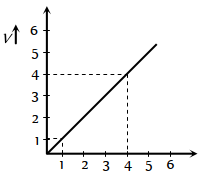
Variation of current and voltage in a conductor has been shown in the diagram below. The resistance of the conductor is.

Image

The breaking stress of a wire depends upon
A moving coil galvanometer has resistance $50\,\Omega $ and it indicates full deflection at $4\,mA$ current. A voltmeter is made using this galvanometer and a $5\,k\Omega $ resistance. The maximum voltage, that can be measured using this voltamenter, will be close to ......$V$
In which case there is maximum extension in the wire, if same force is applied on each wire
Helium at $27^{\circ} \mathrm{C}$ has a volume of 8 litres. It is suddenly compressed to a volume of 1 litre. The temperature of the gas will be $[\gamma=5 / 3]$
A metal ball of surface area $200 \mathrm{~cm}^2$ and temperature $527^{\circ} \mathrm{C}$ is surrounded by a vessel at $27^{\circ} \mathrm{C}$. If the emissivity of the metal is 0.4 , then the rate of loss of heat from the ball is $\left(\sigma=5.67 \times 10^{-8} \mathrm{~J} / \mathrm{m}^2-s-k^4\right)$