Question
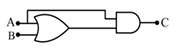
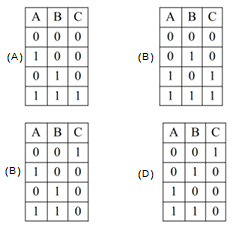
✓
Answer
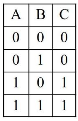
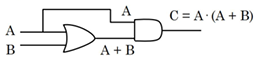
Need a full question paper?
Generate a complete, print-ready paper with questions like this in minutes — across 16+ boards, with answer keys.
Explore more
Similar questions
A freshly prepared radioactive sample of half- life $1$ hour emits radiations that are $128$ times as intense as the permissible safe limit. The minimum time after which this sample can be safely used is .........$hours$
→A solid metal cube of edge length $2\, cm$ is moving in a positive $y-$ direction at a constant speed of $6\, m/s$. There is a uniform magnetic field of $0.1\, T$ in the positive $z-$ direction. The potential difference between the two faces of the cube perpendicular to the $x-$ axis, is.....$mV$
→$\frac{x}{x+4}$ is the ratio of energies of photons produced due to transition of an electron of hydrogen atom from its
→$(i)$ third permitted energy level to the second level and $(ii)$ the highest permitted energy level to the second permitted level. The value of $x$ will be.
The force required to keep a body in uniform circular motion is
An electron is travelling in east direction and a magnetic field is applied in upward direction then electron will deflect in
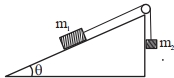
Two bodies of masses $m_{1}=5\,kg$ and $m _{2}=3\,kg$ are connected by a light string going over a smooth light pulley on a smooth inclined plane as shown in the figure. The system is at rest. The force exerted by the inclined plane on the body of mass $m _{1}$ will be$....N$ [Take $g=10\,ms ^{-2}$ ]
→Surface tension is due to
Consider a block and trolley system as shown in figure. If the coefficient of kinetic friction between the trolley and the surface is $0.04$ , the acceleration of the system in $\mathrm{ms}^{-2}$ is :
→(Consider that the string is massless and unstretchable and the pulley is also massless and frictionless):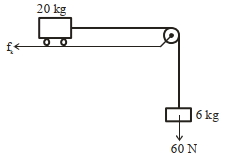
The time period of a satellite of earth is $5$ hours. If the separation between the earth and the satellite is increased to four times the previous value, the new time period will become ......... $hours$
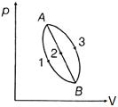
→An ideal gas of mass $m$ in a state $A$ goes to another state $B$ via three different processes as shown in figure. If $Q_{1}, Q_{2}$ and $Q_{3}$ denote the heat absorbed by the gas along the three paths, then
→