MCQ
The work done against electrostatic force gets stored in which form of energy?
- AThermal energy
- BKinetic energy
- CPotential energy
- DSolar energy
Explanation:
The work done against electrostatic force gets stored in the form of potential energy.
Generate a complete, print-ready paper with questions like this in minutes — across 16+ boards, with answer keys.
Four modifications are suggested in the lens formula to include the effect of the thickness t of the lens. Which one is likely to be correct?
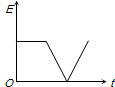
The current i in an induction coil varies with time t according to the graph shown
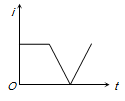
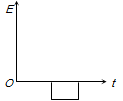
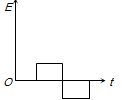
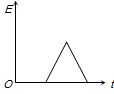
in figure. Which of the following graphs shows the induced emf (e) in the coil with time
|
(a)
|
(b)
|
(c) |
(d)
|
If radius of the  nucleus is estimated to be 3.6 Fermi then the radius of
  nucleus be nearly
| (a) 4 Fermi | (b) 5 Fermi | (c) 6 Fermi | (d) 8 Fermi |
When the accelerating voltage applied on the electrons increased beyond a critical value
|
(a) Only the intensity of the various wavelengths is increased |
| (b) Only the wavelength of characteristic relation is affected |
| (c) The spectrum of white radiation is unaffected |
|
(d) The intensities of characteristic lines relative to the white spectrum are increased but there is no change in their wavelength |
A nucleus is bombarded with a high speed neutron so that resulting nucleus is a radioactive one. This phenomenon is called
| (a) Artificial radioactivity | (b) Fusion | (c) Fission | (d) Radioactivity |
The light when enters the human eye experiences most of the refraction while passing through
|
(a) Cornea |
(b) Aqueous humour |
(c) Vitrous humour |
(d) Crystalline lens |