MCQ
The working of dynamo is based on the principle of :
  • A
    heating effect of electric current
  • electromagnetic induction
  • C
    magnetic induction
  • D
    electric induction

Answer

Correct option: B.
electromagnetic induction
B

Need a full question paper?

Generate a complete, print-ready paper with questions like this in minutes — across 16+ boards, with answer keys.
Start Generating Free

Similar questions

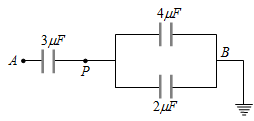
In the figure a potential of $+ 1200\ V$ is given to point $A$ and point $B$ is earthed, what is the potential at the point $P$
In a good conductor the energy gap between the conduction band and the valence band is(a) Infinite(b) Wide(c) Narrow(d) Zero
       
When wavelength of incident photon is decreased then(a) Velocity of emitted photo-electron decreases(b) Velocity of emitted photoelectron increases(c) Velocity of photoelectron do not charge(d) Photo electric current increases


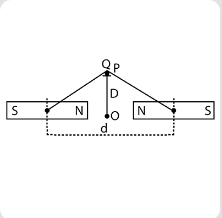
Two identical bar magnets are fixed with their centres at a distance d apart. A stationary charge Q is placed at P in between the gap of the two magnets at a distance D from the centre O as shown in the figure. The force on the charge Q is:
While walking on ice, one should take small steps to avoid slipping. This is because smaller steps ensure:
  1. Larger friction.
  2. Smaller friction.
  3. Larger normal force.
  4. Smaller normal force.
The working of dynamo is based on principle of(a) Electromagnetic induction(b) Conversion of energy into electricity(c) Magnetic effects of current(d) Heating effects of current
   
   
A Zener diode:
A convex lens of focal length 40 cm is in contact with a concave lens of focal length 25 cm. The power of combination is
In Bohr’s model of an atom which of the following is an integral multiple of $\frac{\text{h}}{2\pi}$?
The measurement of an unknown resistance R is to be carried out using Wheatstones bridge $($see Fig. of $).$ Two students perform an experiment in two ways. The first students takes $R_2 = 10\Omega$ and $R_1 = 5\Omega$ . The other student takes $R_2 = 1000\Omega$ and $R_1 = 500\Omega$ . In the standard arm, both take $R_3 = 5\Omega .$
Both find $\text{R}=\frac{\text{R}_2}{\text{R}_1}\text{R}_3=10\Omega$ within errors.