Question
Thermionic emission from a heated filament varies with its temperature T as
|
(a) |
(b) T |
(c) |
(d) |
Thermionic emission from a heated filament varies with its temperature T as
|
(a) |
(b) T |
(c) |
(d) |
(c) 
Generate a complete, print-ready paper with questions like this in minutes — across 16+ boards, with answer keys.
The electric charge in uniform motion produces
|
(a) An electric field only |
(b) A magnetic field only |
|
(c) Both electric and magnetic field |
(d) Neither electric nor magnetic field |
Which is the correct diagram of a half-wave rectifier
|
(a)
|
(b)
|
|
(c)
|
(d)
|
A current carrying circular loop is freely suspended by a long thread. The plane of the loop will point in the direction
|
(a) Wherever left free |
(b) North-south |
|
(c) East-west |
(d) At 45° with the east-west direction |
If a wire of resistance R is melted and recasted to half of its length, then the new resistance of the wire will be
|
(a) R/4 |
(b) R/2 |
(c) R |
(d) 2R |
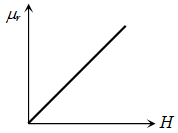
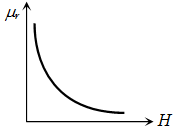
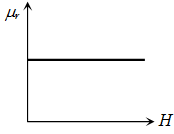
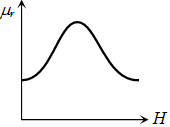
For ferromagnetic material, the relative permeability ( , versus magnetic intensity (H) has the following shape
|
(a)
|
(b)
|
(c)
|
(d)
|
Dispersion can take place for
|
(a) Transverse waves only but not for longitudinal waves |
|
(b) Longitudinal waves only but not for transverse waves |
|
(c) Both transverse and longitudinal waves |
|
(d) Neither transverse nor longitudinal waves |