Question
Those atoms which have the same atomic number but different mass number are called :

Answer

(c) - isotopes

Need a full question paper?

Generate a complete, print-ready paper with questions like this in minutes — across 16+ boards, with answer keys.
Start Generating Free

Similar questions

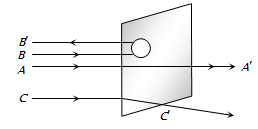
A beam of fast moving alpha particles were directed towards a thin film of gold. The parts $A^{\prime}, B^{\prime}$ and $C^{\prime}$ of the transmitted and reflected beams corresponding to the incident parts $A, B$ and $C$ of the beam, are shown in the adjoining diagram. The number of alpha particles in
The wavelength of emission line spectrum and absorption line spectrum of a substance are related as(a) Absorption has larger value(b) Absorption has smaller value(c) They are equal(d) No relation
   
   
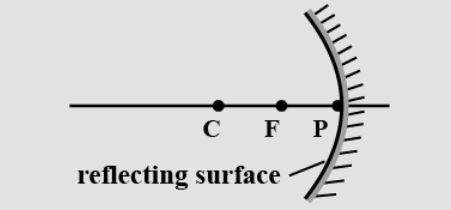
The distance CP is the:
The wavelength of $\mathrm{K}_\alpha$ line for an element of atomic number $43$ is $\lambda.$ Then the wavelength of $\mathrm{K}_\alpha$ line for an element of atomic number $29$ is
A 20 cm length of a certain solution causes right-handed rotation of 38°. A 30cm length of another solution causes left-handed rotation of 24°. The optical rotation caused by 30cm length of a mixture of the above solutions in the volume ratio 1 : 2 is(a) Left handed rotation of 14°(b) Right handed rotation of 14°(c) Left handed rotation of 3°(d) Right handed rotation of 3°
   
   
Seven capacitors each of capacity $2\ \mu F$ are to be so connected to have a total capacity $\frac{10}{11}\ \mu F$. Which will be the necessary figure as shown
Hydrogen $(H),$ deuterium $(D),$ singly ionized helium $\left(\mathrm{He}^{+}\right)$ and doubly ionized lithium $(Li)$ all have one electron around the nucleus. Consider $n =2$ to $n = 1$ transition. The wavelengths of emitted radiations are $\lambda_1, \lambda_2, \lambda_3$ and$ \lambda_4$  respectively. Then approximately
The order of the size of nucleus and Bohr radius of an atom respectively are
The diffusion current in a p-n junction is:
A normally incident ray reflected at an angle of 90°. The value of critical angle is(a) 45°(b) 90°(c) 65°(d) 43.2°