Question
Three specimens A, B, C of same radioactive element has activities 1 microcurie, 1 rutherford and 1 becquerel respectively. Which specimen has maximum mass?

Answer

  1. B

Need a full question paper?

Generate a complete, print-ready paper with questions like this in minutes — across 16+ boards, with answer keys.
Start Generating Free

Similar questions

The conductivity of a semiconductor increases with increase in temperature because:
A beam of natural light falls on a system of 6 polaroids, which are arranged in succession such that each polaroid is turned through 30° with respect to the preceding one. The  percentage of incident intensity that passes through the system will be(a) 100%(b) 50%(c) 30%(d) 12%
       
The potential difference applied to an $X-$ray tube is $5\ kV$ and the current through it is $3.2\ mA.$ Then the number of electrons striking the target per second is
A circular loop of area $0.01\ m^2$ carrying a current of $10\ A,$ is held perpendicular to a magnetic field of intensity $0.1\ T.$ The torque acting on the loop is
Work done by an external force in bringing a unit positive charge from infinity to a point is called as:
Number of electrons in the valence shell of a pure semiconductor is:
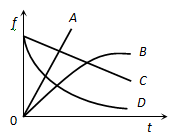
The fraction $f$ of radioactive material that has decayed in time $t,$ varies with time $t.$ The correct variation is given by the curve
If ‘p’ region of a semi conductor is connected to negative and ‘n’ region to positive pole, it is said to be:
A parallel beam of monochromatic light of wavelength $5000 \mathring A$ is incident normally on a single narrow slit of width $0.001\  mm .$ The light is focused by a convex lens on a screen placed on the focal plane. The first minimum will be formed for the angle of diffraction equal to
Self induction of a solenoid is(a) Directly proportional to current flowing through the coil(b) Directly proportional to its length(c) Directly proportional to area of cross-section(d) Inversely proportional to area of cross-section