Question

Two capacitors   and   in series, are connected in parallel to a third capacitor. This arrangement is then connected to a battery of e.m.f. = 2V, as shown in the figure. How much energy is lost by the battery in charging the capacitors
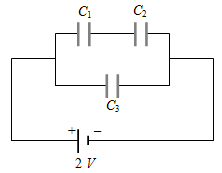
(a) 22  

(b) 11  

(c)  

(d)  

Answer

(b) 11  

Need a full question paper?

Generate a complete, print-ready paper with questions like this in minutes — across 16+ boards, with answer keys.

Start Generating Free

Similar questions

Give the SI unit of magnetic dipole moment.

The Bohr radius of the fifth electron of phosphorus (atomic number = 15) acting as dopant in silicon (relative dielectric constant = 12) is

(a) 10.6 Å

(b) 0.53 Å

(c) 21.2 Å                                           

(d) None of these

In  nucleus, there are

(a) 138 protons and 88 neutrons

(b) 138 neutrons and 88 protons

(c) 226 protons and 88 electrons

(d) 226 neutrons and 138 electrons

As the temperature of a metallic resistor is increased, the product of its resistivity and conductivity:
  1. Increases.
  2. Decreases.
  3. Remains constant.
  4. May increase or decrease.

An electron is moving towards x-axis. An electric field is along y-direction then path of electron is

(a) Circular

(b) Elliptical

(c) Parabola

(d) None of these

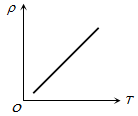
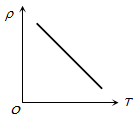
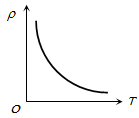
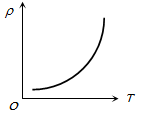
The temperature (T) dependence of resistivity (r) of a semiconductor is represented by

(a)

(b)

(c)

(d)

A nucleus of   originally at rest emits a particle with speed v. What will be the recoil speed of the daughter nucleus

(a) 4v/206

(b) 4v/214

(c) v/206

(d) v/214

Two coherent sources of light can be obtained by

(a) Two different lamps

(b) Two different lamps but of the same power

(c) Two different lamps of same power and having the same colour

(d) None of the above

Two statements are given-one labelled Assertion (A) and the other labelled Reason (R). Select the correct answer to these questions from the codes (a), (b), (c) and (d) as given below.
Assertion (A): The kinetic energy of a charged particle moving in a uniform magnetic field does not change. Reason (R): In a uniform magnetic field no force acts on the charge particle.
Which of the following best describe the electromagnetic induction?