MCQ
Two coherent sources of light can be obtained by
  • A
     Two different lamps
  • B
     Two different lamps but of the same power
  • C
    Two different lamps of same power and having the same colour
  •  None of the above

Answer

Correct option: D.
 None of the above
 None of the above

Need a full question paper?

Generate a complete, print-ready paper with questions like this in minutes — across 16+ boards, with answer keys.
Start Generating Free

Similar questions

In a radioactive disintegration, the ratio of initial number of atoms to the number of atoms present at an instant of time equal to its mean life is
In an $AC$ generator, a coil with $N$ turns, all of the same area $A$ and total resistance $R$, rotates with frequency $\omega$ in a magnetic field $B$. The maximum value of emf generated in the coil is
The same radioactive nucleus may emit?
$NPN$ transistor are preferred to $PNP$ transistor because they have
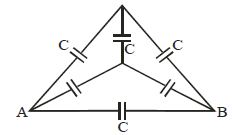
Find net capacitance between $A$ and $B$
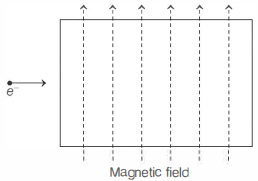
An electron enters a chamber in which a uniform magnetic field is present as shown below.  An electric field of appropriate magnitude is also applied, so that the electron travels undeviated without any change in its speed through the chamber. We are ignoring gravity. Then, the direction of the electric field is
The force that a unit positive charge would experiences if placed at that point is called as $........$ due to charge at a point in space.
A wire of length 1 m is moving at a speed of $2 \mathrm{~ms}^{-1}$perpendicular to its length and a homogeneous magnetic field of 0.5 T. The ends of the wire are joined to a circuit of resistance 6 W. The rate at which work is being done to keep the wire moving at constant speed is
The intensity variation in the interference pattern obtain with the help of two coherent sources is $5\%$ of the average intensity. Find out the ratio of intensities of two sources
A particle of mass $M$ at rest decays into two particles of masses $m_1$ and $m_2$, having non-zero velocities. The ratio of the de-Broglie wavelengths of the particles, ${\lambda _1}/{\lambda _2}$ is