MCQ
Two equilibria, $AB \rightleftharpoons {A^ + } + {B^ - }$ and $AB + {B^ - } \rightleftharpoons AB_2^ - $ are simultaneously maintained in a solution with equilibrium constants, $K_1$ and $K_2$ respectively. The ratio of $[A^+]$ to $[AB_2^-]$ in the solution is
  • A
    directly proportional to $[B^-]$
  • B
    inversely proportional to $[B^-]$
  • C
    directly proportional to the square of $[B^-]$
  • inversely proportional to the square of $[B^-]$

Answer

Correct option: D.
inversely proportional to the square of $[B^-]$
d
Given,

$AB\overset {{K_1}} \longleftrightarrow {A^ + } + {B^{ - 1}}$

${K_1} = \frac{{[{A^ + }][{B^ - }]}}{{[AB]}}$

$AB + {B^ - }\overset {{K_2}} \longleftrightarrow AB_2^ - $

${K_2} = \frac{{[AB_2^ - ]}}{{[AB][{B^ - }]}}$

Dividing $K_1$ and $K_2$ we get

$K = \frac{{{K_1}}}{{{K_2}}} = \frac{{[{A^ + }]{{[{B^ - }]}^2}}}{{[AB_2^ - ]}}$

$\therefore \,\frac{{[{A^ + }]}}{{[AB_2^ - ]}} = \frac{K}{{{{[{B^ - }]}^2}}}$

Need a full question paper?

Generate a complete, print-ready paper with questions like this in minutes — across 16+ boards, with answer keys.

Start Generating Free

Similar questions

The distance between $3^{rd}$ and $2^{nd}$ Bohr's orbits in the hydrogen atom is
The effective distance between the centre of the nucleus of an ion and the point up to which the nucleus has an influence on its electron cloud is called _____________.
The electronic configuration of four elements are

$(I)\,[Kr]\,5s^1$                                  $(II)\, [Rn]\,5f^{14}\,6d^1\,7s^2$ 

$(III)\,[Ar]\,3d^{10}\,4s^2\,4p^5$           $(IV)\,[Ar]\,3d^6\,4s^2$
Consider the following Statements

$(i)\, I$ shows variable oxidation State

$(ii)\, II$ is a $d-block$ element
$(iii)$ The compound formed between $I$ and $III$ is covalent
$(iv)\,IV$ shows single oxidation state
Which Statement is True $(T)$ or False $(F)$?

What is the work function of the metal if the light of wavelength $4000\, \mathop A\limits^o $ generates photoelectrons of velocity $6\times10^5\, ms^{-1}$ from it? ............. $\mathrm{eV}$ (Mass of electron $= 9\times10^{-31}\, kg$ Velocity of light $= 3\times10^8\, ms^{-1}$ Planck’s constant $= 6.626\times10^{-34}\, Js$ Charge of electron $= 1.6\times10^{-19}\, J\,eV^{-1}$)
$120\,gm$ of urea are present in $5\,litre$ solution, the active mass of urea is
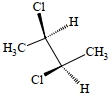
The correct statement $(s)$ about the compound given below is $(are)$ $Image$

$(A)$ The compound is optically active

$(B)$ The compound possesses centre of symmetry

$(C)$ The compound possesses plane of symmetry

$(D)$ The compound possesses axis of symmetry

The decreasing values of bond angles from $NH_3$ $(106^o )$ to $SbH_3 \,\,(101^o )$ down group$-15$ of the periodic table is due to
Assertion : The increase in internal energy $(\Delta E)$ for the vaporization of one mole of water at $1$ $atm$ and $373\, K$ is zero.
Reason : For all isothermal processes, $\Delta E = 0$
For the reaction$A(g) + 3B(g) \rightleftharpoons 2C(g)$ at $27\,^oC$, $2\, moles$ of $ A$, $4\, moles$ of $B$ and $6\, moles$ of $C$ are present in a $2\, litre$ vessel. If $K_C$ for the reaction is $1.2$, the reaction will proceed in
Correct statement is