Question
Two free parallel wires carrying currents in opposite direction
| (a) Attract each other |
| (b) Repel each other |
| (c) Neither attract nor repel |
| (d) Get rotated to be perpendicular to each other |
Two free parallel wires carrying currents in opposite direction
| (a) Attract each other |
| (b) Repel each other |
| (c) Neither attract nor repel |
| (d) Get rotated to be perpendicular to each other |
(b) Repel each other
Generate a complete, print-ready paper with questions like this in minutes — across 16+ boards, with answer keys.
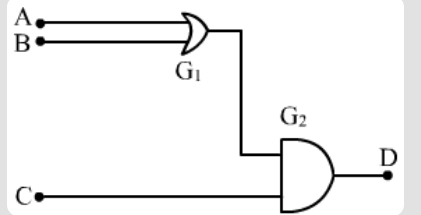
Bonding in a germanium crystal (semi- conductor) is
| (a) Metallic | (b) Ionic |
(c) Vander Waal's type |
(d) Covalent |
A convex lens of power + 6D is placed in contact with a concave lens of power – 4D. What is the nature and focal length of the combination
|
(a) Concave, 25 cm |
(b) Convex, 50 cm |
(c) Concave, 20 cm |
(d) Convex, 100 cm |
Two resistors whose value are in ratio 2 : 1 are connected in parallel with one cell. Then ratio of power dissipated is
|
(a) 2 : 1 |
(b) 4 : 1 |
(c) 1 : 2 |
(d) 1 : 1 |
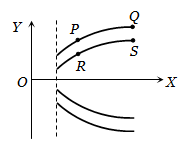
In Thomson spectrograph experiment, four positive ions P,Q,R and S are situated on Y-X curve a shown in the figure
|
(a) The specific charge of R and S are same |
|
(b) The masses of P and S are same |
|
(c) The specific charges of Q and R are same |
|
(d) The velocities of R and S are same |