MCQ
Two solutions $A $ and $B$ are separated by semi- permeable membrane. If liquid flows form $ A $ to $ B$ then]
  • $A$  is less concentrated than $B$
  • B
    $A $ is more concentrated than $B$
  • C
    Both have same concentration
  • D
    None of these

Answer

Correct option: A.
$A$  is less concentrated than $B$
a
(a)Osmosis occur from dilute solution to concentrate solution. Therefore solution $A $ is less concentrated than $B.$

Need a full question paper?

Generate a complete, print-ready paper with questions like this in minutes — across 16+ boards, with answer keys.
Start Generating Free

Similar questions

${K_{sp}}$ of an electrolyte $ AB$  is $1 \times {10^{ - 10}}.$ $[{A^ + }] = {10^{ - 5}}M,$ which concentration of ${B^ - }$ will not give precipitate of $AB$
Irrespective of the source, pure sample of water always yields $88.89\%$ mass of oxygen and $11.11\%$ mass of hydrogen. This is explained by the law of
The effective atomic number of cobalt in the complex ${[Co{(N{H_3})_6}]^{3 + }}$ is
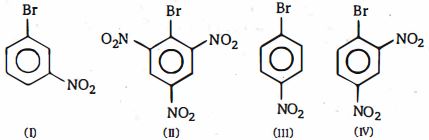
The decreasing order of reactivity of given compound towards nucleophilic  substitution with aqueous $NaOH$ is
Degree of dissociation of $0.1\,N\,\,C{H_3}COOH$ is (Dissociation constant $ = 1 \times {10^{ - 5}}$)
To which of the following atom, the attachment of electron is most difficult?
Catalyst $A$ reduces the activation energy for a reaction by $10\, k\,J\, mol ^{-1}$ at $300\, K$. The ratio of rate $\frac{ k _{ T }, \text { Catalysed }}{ k _{ T }, \text { Uncatalysed }}$ is $e ^{ x }$ [nearest integer $]$

[Assume theat the pre-exponential factor is same in both the cases.

Given $R =8.31 \,J\, K ^{-1} \,mol ^{-1}$ ]
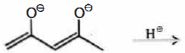
Based upon an understanding of product stability, predict the product formed when  the following dianion reacts with one equivalent of acid
Only two isomers of monochloro product is possible of
The increasing order of electron affinity of the electronic configurations of element is
$(I)\,1s^2\,2s^2\,2p^6 \,3s^2\,3p^5$               $(II)\, 1s^2\, 2s^2\, 2p^3$
$(III)\, 1s^2\, 2s^2\,2p^5$                           $(IV)\, 1s^2\, 2s^2\,2p^6 \,3s^1$