Question
Two statements are given-one labelled Assertion (A) and the other labelled Reason (R). Select the correct answer to these questions from the codes (a), (b), (c) and (d) as given below.
  1. Both A and R are true and R is the correct explanation of A.
  2. Both A and R are true but R is not the correct explanation of A.
  3. A is true but R is false.
  4. A is false and R is also false.
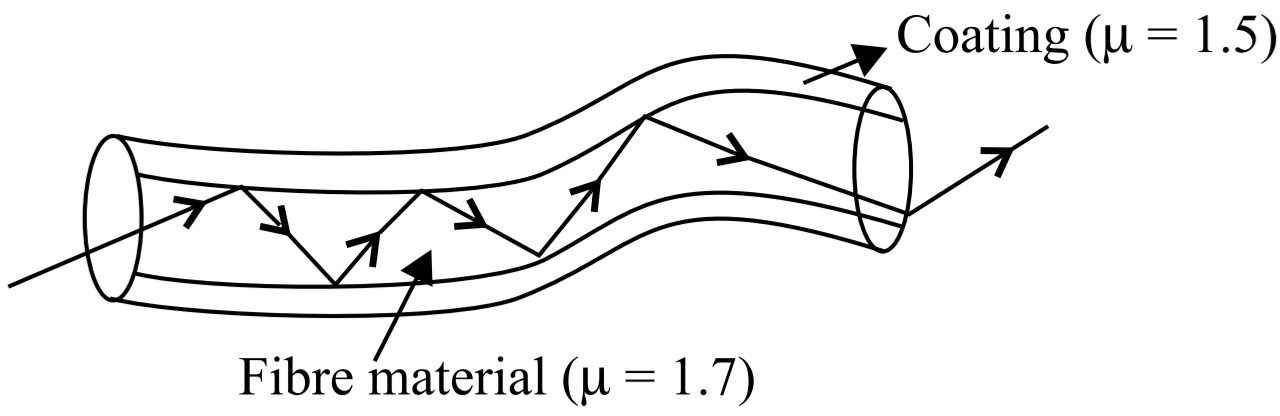
Assertion: Optical fibers are used to transmit light without any loss in its intensity over distance of several kilometers.
Reason: Optical fibers are very thick and all the light is passed through it without any loss.
Need a full question paper?

Generate a complete, print-ready paper with questions like this in minutes — across 16+ boards, with answer keys.

Start Generating Free

Similar questions

For two statements are given-one labelled Assertion (A) and the other labelled Reason (R). Select the correct answer to these questions from the codes (a), (b), (c) and (d) as given below.
  1. Both A and R are true, and R is the correct explanation of A.
  2. Both A and R are true, but R is not the correct explanation of A.
  3. A is true, but R is false.
  4. A is false, and R is also false.
Assertion (A): Positive charge always moves from a higher potential point to a lower potential point.
Reason (R): Electric potential is a vector quantity.
For question two statements are given-one labelled Assertion (A) and the other labelled Reason (R). Select the correct answer to these questions from the codes (a), (b), (c) and (d) as given below.
  1. Both A and R are true and R is the correct explanation of A.
  2. Both A and R are true but R is NOT the correct explanation of A.
  3. A is true but R is false.
  4. A is false and R is also false.
Assertion (A): ln YDSE bright and dark fringe are equally spaced.
Reason (R): It only depends upon phase difference.
Two statements are given-one labelled Assertion (A) and the other labelled Reason (R). Select the correct answer to these questions from the codes (a), (b), (c) and (d) as given below.
  1. Both A and R are true and R is the correct explanation of A.
  2. Both A and R are true but R is not the correct explanation of A.
  3. A is true but R is false.
  4. A is false and R is also false.
Assertion: If optical density ofa substance is more than that of water, then the mass density of substance can be less than water.
Reason: Optical density and mass density are not related.
For two statements are given-one labelled Assertion (A) and the other labelled Reason (R). Select the correct answer to these questions from the codes (a), (b), (c) and (d) as given below.
  1. Both A and R are true, and R is the correct explanation of A.
  2. Both A and R are true, but R is not the correct explanation of A.
  3. A is true, but R is false.
  4. A is false, and R is also false.
Assertion (A): A capacitor can be broken by placing large amount of charge on it.
Reason (R): After breakage potential, the capacitor is destroyed.
For question two statements are given-one labelled Assertion (A) and the other labelled Reason (R). Select the correct answer to these questions from the codes (a), (b), (c) and (d) as given below.
  1. Both A and R are true and R is the correct explanation of A.
  2. Both A and R are true but R is NOT the correct explanation of A.
  3. A is true but R is false.
  4. A is false and R is also false.
Assertion (A): Interference obeys the law of conservation of energy.
Reason (R): The energy is redistributed in case of interference.
Directions: In the following questions, the Assertions (A) and Reason(s) (R) have been put forward. Read both the statements carefully and choose the correct alternative from the following:
Assertion: When variable frequency AC source is connected to a capacitor, displacement current increases with increase in frequency.
Reason: As frequency increases conduction current also increases.
  1. Both Assertion and Reason are correct and Reason is the correct explanation for Assertion.
  2. Both Assertion and Reason are correct but Reason is not the correct explanation for Assertion.
  3. Assertion is correct but Reason is incorrect.
  4. Both Assertion and Reason are incorrect.
For two statements are given-one labelled Assertion (A) and the other labelled Reason (R). Select the correct answer to these questions from the codes (a), (b), (c) and (d) as given below.
  1. Both A and R are true, and R is the correct explanation of A.
  2. Both A and R are true, but R is not the correct explanation of A.
  3. A is true, but R is false.
  4. A is false, and R is also false.
Assertion: Fuse wire must have high resistance and low melting point.
Reason: Fuse is used for small current flow only.
Two statements are given-one labelled Assertion (A) and the other labelled Reason (R). Select the correct answer to these questions from the codes (a), (b), (c) and (d) as given below.
  1. Both A and R are true and R is the correct explanation of A.
  2. Both A and R are true but R is NOT the correct explanation of A.
  3. A is true but R is false.
  4. A is false and R is also false.
Assertion (A): When current is represented by a straight line, the magnetic field will be circular.
Reason (R): According to Fleming's left hand rule, direction of force is parallel to the magnetic field.
For two statements are given-one labelled Assertion (A) and the other labelled Reason (R). Select the correct answer to these questions from the codes (a), (b), (c) and (d) as given below.
  1. Both A and R are true, and R is the correct explanation of A.
  2. Both A and R are true, but R is not the correct explanation of A.
  3. A is true, but R is false.
  4. A is false, and R is also false.
Assertion: The temperature coefficient of resistance is always positive only for metals.
Reason: On increasing the temperature, the resistance of metals and alloys increases.
Two statements are given-one labelled Assertion (A) and the other labelled Reason (R). Select the correct answer to these questions from the codes (a), (b), (c) and (d) as given below.
  1. Both A and R are true and R is the correct explanation of A.
  2. Both A and R are true but R is not the correct explanation of A.
  3. A is true but R is false.
  4. A is false and R is also false.
Assertion: By increasing the diameter of the objective of telescope, we can increase its range.
Reason: The range of a telescope tells us how far away a star of some standard brightness can be spotted by telescope.