MCQ
Two thin wire rings each having a radius $R$ are placed at a distance $d$ apart with their axes coinciding. The charges on the two rings are $+q$ and $-q.$ The potential difference between the centres of the two rings is
  • A
    Zero
  • B
    $\frac{\mathrm{Q}}{4 \pi \varepsilon_0}\left[\frac{1}{\mathrm{R}}-\frac{1}{\sqrt{\mathrm{R}^2+\mathrm{d}^2}}\right]$
  • C
    $\frac{\mathrm{QR}}{4 \pi \varepsilon_0 \mathrm{~d}^2}$
  • $\frac{\mathrm{Q}}{2 \pi \varepsilon_0}\left[\frac{1}{\mathrm{R}}-\frac{1}{\sqrt{\mathrm{R}^2+\mathrm{d}^2}}\right]$
Answer

Correct option: D.
$\frac{\mathrm{Q}}{2 \pi \varepsilon_0}\left[\frac{1}{\mathrm{R}}-\frac{1}{\sqrt{\mathrm{R}^2+\mathrm{d}^2}}\right]$

Need a full question paper?

Generate a complete, print-ready paper with questions like this in minutes — across 16+ boards, with answer keys.

Start Generating Free

Similar questions

A magnetic dipole is under the influence of two magnetic fields The angle between the field directions is $60^\circ$ and one of the fields has a magnitude of $1.2 \times 10^{–2}T.$ If the dipole comes to stable equilibrium at an angle of $15^\circ$ with this field, what is the magnitude of other field?
Order of  q/m  ratio of proton, α -particle and electron is(a) e > p > α(b) p > α > e(c) e > α > p(d) None of these
       
The value of ratio N/Z is great for heavy nucleus because :
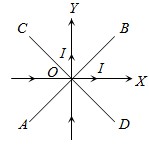
Two very thin metallic wires placed along $X$ and $Y-$axis carry equal currents as shown here. $AB$ and $CD$ are lines at $45^\circ$  with the axes with origin of axes at $O.$ The magnetic field will be zero on the line
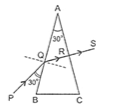
In the diagram, a prism of angle $30^{\circ}$ is used. A ray $PQ$ is incident as shown. An emergent ray $RS$ emerges perpendicular to the second face. The angle of deviation is:
Image
The mass of an $\alpha-$particle is
A concave lens of focal length 20 cm placed in contact with a plane mirror acts as a(a) Convex mirror of focal length 10 cm(b) Concave mirror of focal length 40 cm(c) Concave mirror of focal length 60 cm(d) Concave mirror of focal length 10 cm


What is not true of equipotential surface?
A piece of wire of resistance 4 ohms is bent through 180°  at its mid point and the two halves are twisted together, then the resistance is(a) 8 ohms(b) 1 ohm(c) 2 ohms(d) 5 ohms
       
Masses of 3 wires of same metal are in the ratio 1 : 2 : 3 and their lengths are in the ratio 3 : 2 : 1.  The electrical resistances are in ratio(a) 1 : 4 : 9(b) 9 : 4 : 1(c) 1 : 2 : 3(d) 27 : 6 : 1