Question
Two wires carrying equal currents i each, are placed perpendicular to each other, just avoiding a contact. If one wire is held fixed and the other is free to move under magnetic forces, what kind of motion will result?

Answer

The magnetic force on a wire carrying an electric current i is $\overrightarrow{\text{F}}=\text{i}.\big(\overrightarrow{\text{l}}\times\overrightarrow{\text{B}}\big),$ where l is the length of the wire and B is the magnetic field acting on it. Suppose we have one wire in the horizontal direction (fixed) and other wire in the vertical direction (free to move). If the horizontal wire is carrying current from right to left is held fixed perpendicular to the vertical wire, which is free to move, the upper portion of the free wire will tend to move in the left direction and the lower portion of the wire will tend to move in the right direction, according to Fleming's left hand rule, as the magnetic field acting on the wire due to the fixed wire will point into the plane of paper above the wire and come out of the paper below the horizontal wire and the current will flow in upward direction in the free wire. Thus, the free wire will tend to become parallel to the fixed wire so as to experience maximum attractive force.

Need a full question paper?

Generate a complete, print-ready paper with questions like this in minutes — across 16+ boards, with answer keys.
Start Generating Free

Similar questions

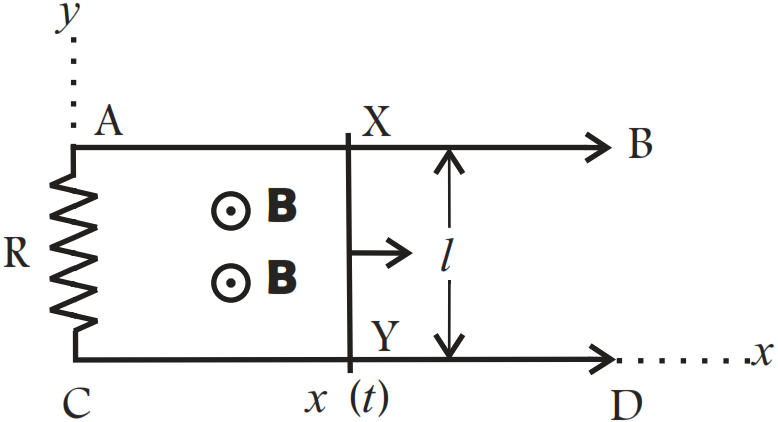
A conducting wire XY of mass m and neglibile resistance slides smoothly on two parallel conducting wires as shown in Fig. The closed circuit has a resistance R due to AC. AB and CD are perfect conductors. There is a magnetic field $\text{B}=\text{B}(\text{t})\hat{\text{k}}$.

  1. Write down equation for the acceleration of the wire XY.
  2. If B is independent of time, obtain v(t), assuming v(0) = u0.
  3. For (b), show that the decrease in kinetic energy of XY equals the heat lost in R.
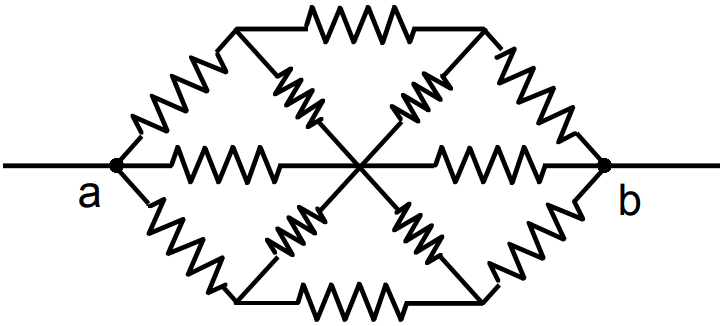
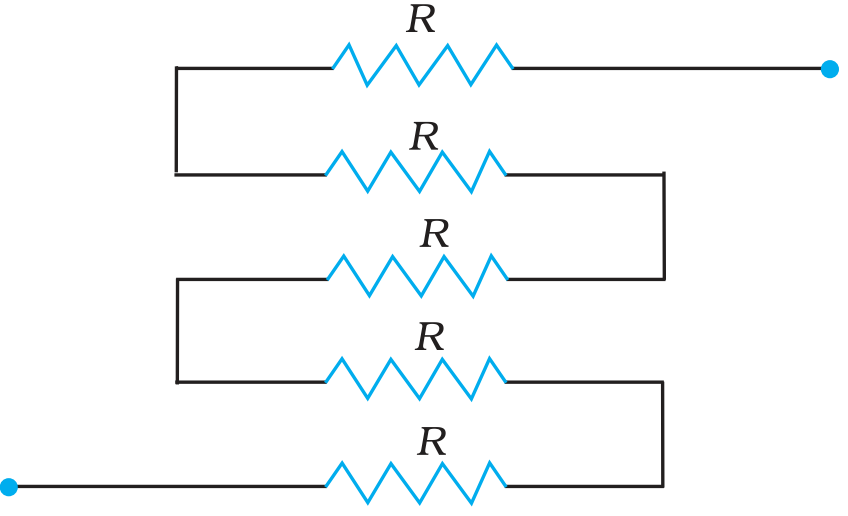
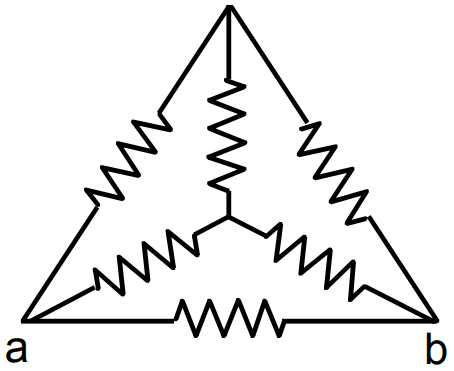
Find the equivalent resistance of the circuits shown in the figure. between the points a and b. Each resistor has resistance r.


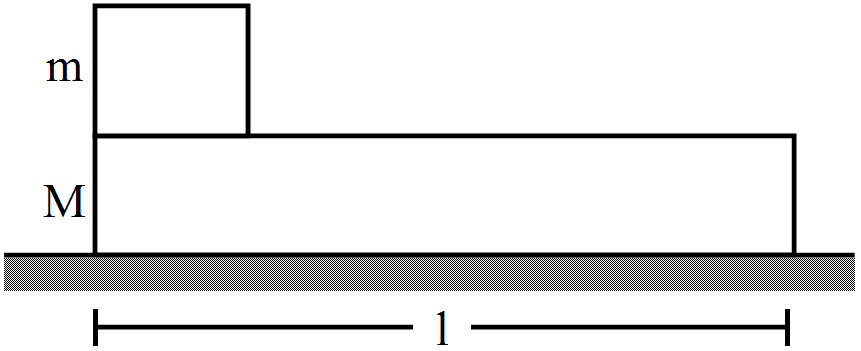
Figure shows a small block of mass m kept at the left end of a larger block of mass M and length l. The system can slide on a horizontal road. The system is started towards right with an initial velocity v. The friction coefficient between the road and the bigger block is g and that between the block is $\frac{\mu}{2}.$ Find the time elapsed before the smaller blocks separates from the bigger block.

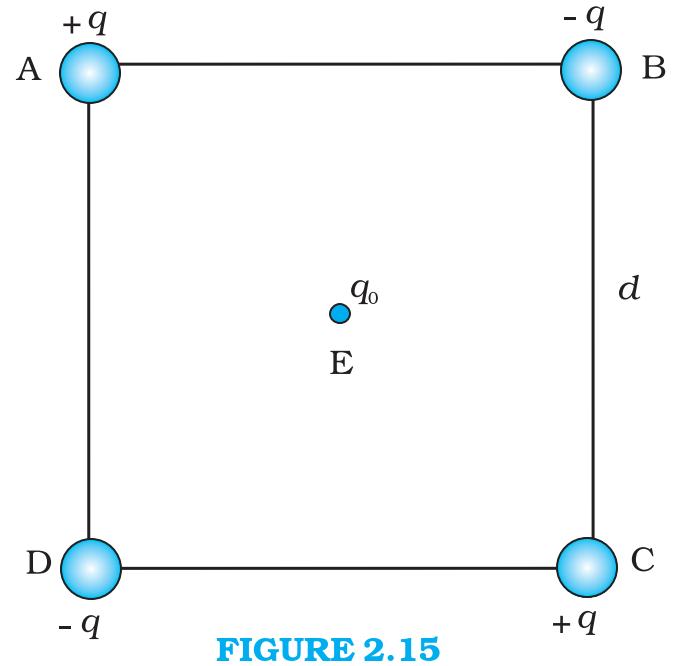
Four charges are arranged at the corners of a square $ABCD$ of side $d$, as shown in Fig. 2.15.(a) Find the work required to put together this arrangement. (b) A charge $q_0$ is brought to the centre $E$ of the square, the four charges being held fixed at its corners. How much extra work is needed to do this?
Image
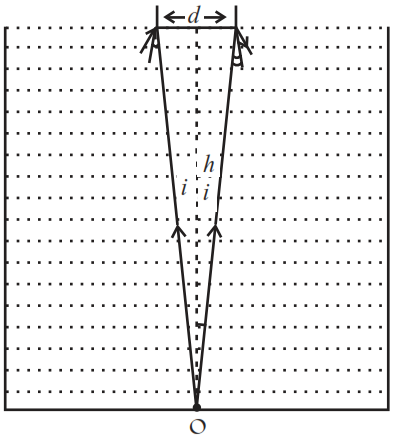
A jar of height h is filled with a transparent liquid of refractive index μ (Fig). At the centre of the jar on the bottom surface is a dot. Find the minimum diameter of a disc, such that when placed on the top surface symmetrically about the centre, the dot is invisible.

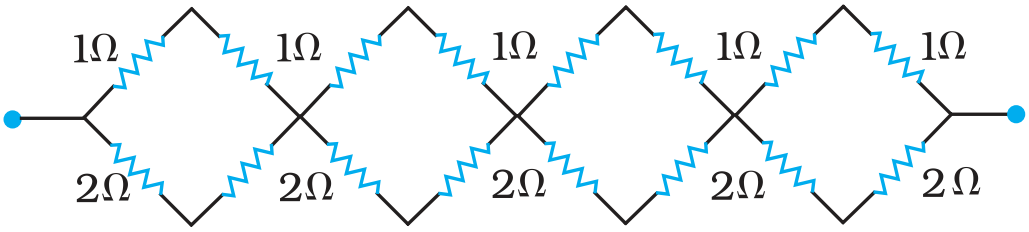
Determine the equivalent resistance of networks shown in Fig.


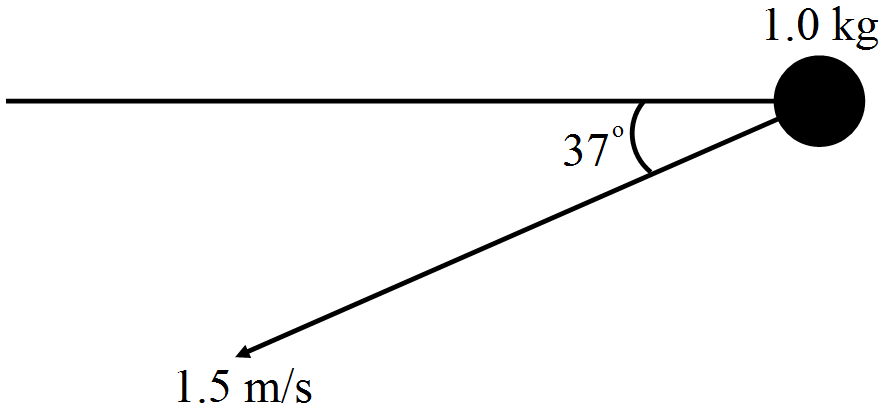
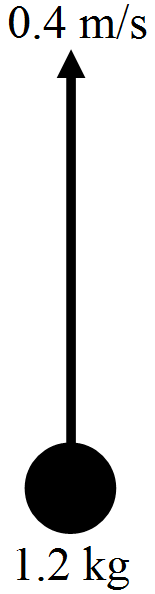
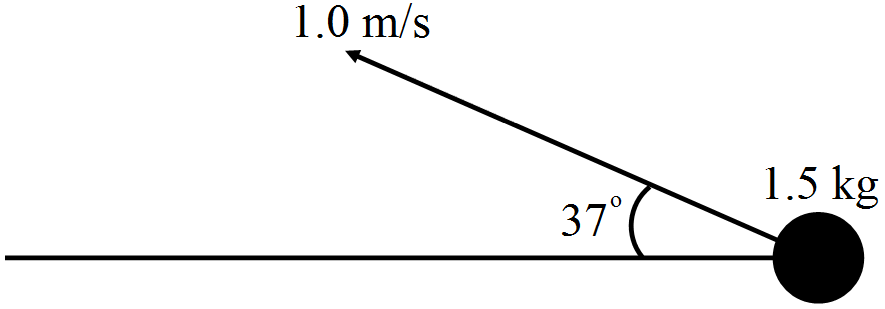
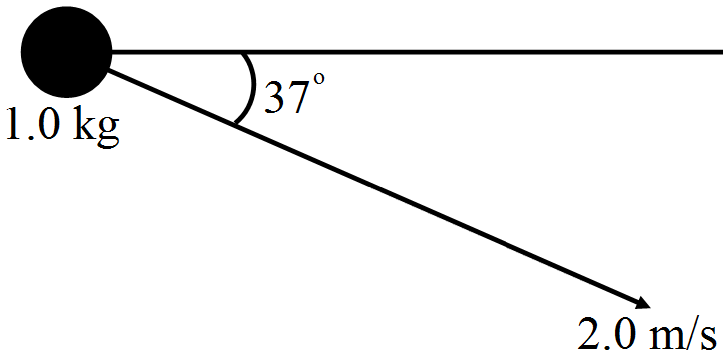
Calculate the velocity of the centre of mass of the system of particles shown in figure.


Are the nucleons fundamental particles, or do they consist of still smaller parts? One way to find out is to probe a nucleon just as Rutherford probed an atom. What should be the kinetic energy of an electron for it to be able to probe a nucleon? Assume the diameter of a nucleon to be approximately 10-15m.
A converging lens of focal length 15cm and a converging mirror of focal length 10cm are placed 50cm apart with common principal axis. A point source is placed in between the lens and the mirror at a distance of 40cm from the lens. Find the locations of the two images formed.
Assuming an electron is confined to a 1nm wide region , find the uncertainty in momentum using Heisenberg Uncertainty principle (Ref Eq 11.12 of NCERT Textbook). You can assume the uncertainty in position $\Delta\text{x}$ as 1nm. Assuming $\text{p}\Box\Delta\text{p}$, find the energy of the electron in electron volts.