Question
Under what circumstances is the number 0 considered a significant figure.

Answer

Zero is considered a significant figure in the following circumstances:
(i) All zeros between two non-zero digits are significant figures.
(ii) If there is a non-zero digit before the decimal and there are zero significant digits after it. Like all zeros in 3.005 are significant figures.
(iii) All zeros following any non-zero digit on the right side of the decimal are significant figure, e.g. in 4.6500 both zeros are significant figures.

Need a full question paper?

Generate a complete, print-ready paper with questions like this in minutes — across 16+ boards, with answer keys.
Start Generating Free

Similar questions

A block is kept on the floor of an elevator at rest. The elevator starts descending with an acceleration of $12m/s^2$. Find the displacement of the block during the first $0.2s$ after the start. Take $g = 10m/s^2$.
A string of length L and mass M is lying on a horizontal table. A force F is applied at one of its end. What is the tension in string at a distance x from the end at which force is applied?
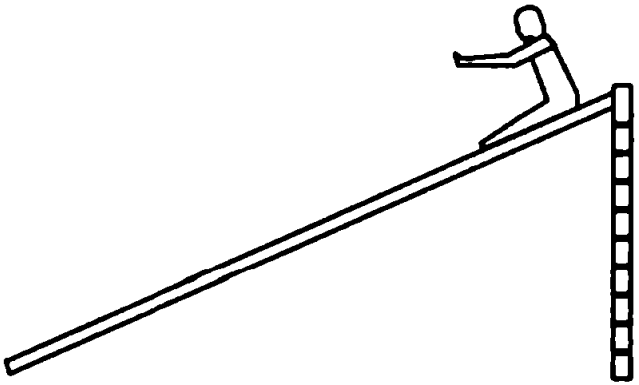
In a children's park, there is a slide which has a total length of $10m$ and a height of $8.0m ($figure$).$ Vertical ladder are provided to reach the top. A boy weighing $200N$ climbs up the ladder to the top of the slide and slides down to the ground. The average friction offered by the slide is three tenth of his weight. Find
  1. The work done by the ladder on the boy as he goes up.
  2. The work done by the slide on the boy as he comes down. Neglect any work done by forces inside the body of the boy.
It is a common observation that rain clouds can be at about a kilometre altitude above the ground.
If a rain drop falls from such a height freely under gravity, what will be its speed? Also calculate in km/h. ($g = 10m/s^2$)
Consider the wave $\text{y}(\text{x, t})=2.2\cos(300\text{t}-0.24\text{x}).$ If the units for $y, t$ and $x$ are $mm, s$ and $m$ respectively, deduce:
  1. The amplitude.
  2. The frequency.
  3. The wavelength.
  4. The wave velocity.
  5. The amplitude of particle velocity.
State which of the following situations are possible and give an example for each of these?
  1. An object with a constant acceleration but with zero velocity.
  2. An object moving in a certain direction with acceleration in the perpendicular direction.
Displacement versus time curve for a particle executing $\text{S.H.M}$. is shown in Fig. Identify the points marked at which,
  1. Velocity of the oscillator is zero,
  2. Speed of the oscillator is maximum.
When a block of mass M is suspended by a long wire of length L, the elastic potential energy stored in the wire is $\frac{1}{2}\times$ stress × strain × volume. Show that it is equal to $\frac{1}{2}\text{Mgl}$ where l is the extension. The loss in gravitational potential energy of the Mass-earth sustem is Mgl. does the remaining $\frac{1}{2}\text{Mgl}$ energy go?
A point object is placed on the principal axis of a convex lens (f = 15cm) at a distance of 30cm from it. A glass plate $(\mu=1.50)$ of thickness 1cm is placed on the other side of the lens perpendicular to the axis. Locate the image of the point object.
Aman stands on a weighing machine placed on a horizontal platform. The machine reads $50kg$. By means of a suitable mechanism, the platform is made to execute harmonic vibrations up and down with a frequency of two vibrations per second. What will be the effect on the reading of the weighing machine? The amplitude of vibrations of platform is $5cm$. Take, $g = 10ms^{-2}$.