Question
Use the Remainder Theorem to factorise the following expression: $2 x^3+x^2-13 x+6$.

Answer

Let $f(x)=2 x^3+x^2-13 x+6$
Factors of 6 are $\pm 1, \pm 2, \pm 3, \pm 6$
Let $x=2$, then
$
\begin{aligned}
& f(2)=2(2)^3+(2)^2-13 \times 2+6 \\
& =16+4-26+6 \\
& =26-26 \\
&
=0 \\
& \because f(2)=0
\end{aligned}
$
$\therefore x-2$ is the factor of $f(x)$...(By Remainder Theorem)
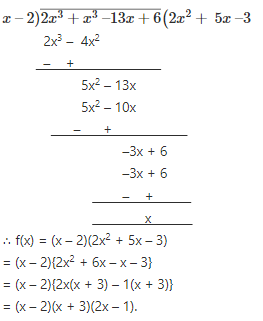
Dividing $f(x)$ by $x-2$, we get
Image

Need a full question paper?

Generate a complete, print-ready paper with questions like this in minutes — across 16+ boards, with answer keys.
Start Generating Free

Similar questions

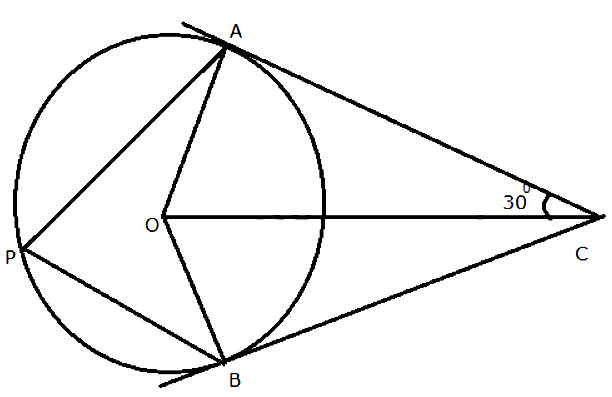
In the given figure, O is the centre of the circle. Tangents at A and B meet at C. If angle ACO = 30°, find: angle APB
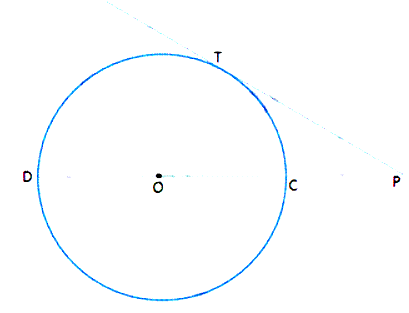
In following fig., PT is tangent to the circle at T and CD is a diameter of the same circle. If PC= 3cm and PT= 6cm, find the radius of the circle.
Ram deposits ₹ $ 1000$ per month in a recurring deposit account for $3$ years at $8 \%$ per annum interest. Find the maturity value.
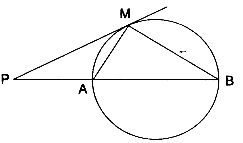
In the figure, $PM$ is a tangent to the circle and $PA = AM$. Prove that:
(i) Δ PMB is isosceles
(ii) $PA \times PB = MB^2$

Prove.
$\frac{\sin A}{1+\cos A}=\operatorname{cosec} A-\cot A$
If $A=\left[\begin{array}{ll}2 & 1 \\ 0 & 0\end{array}\right], B=\left[\begin{array}{ll}2 & 3 \\ 4 & 1\end{array}\right]$ and $C=\left[\begin{array}{ll}1 & 4 \\ 0 & 2\end{array}\right]$ then show that $A(B+ C)=A B+A C$
Solve the following equation : $x ^2-4 \sqrt{2} x +6=0$
Find $x$ and $y$ if $[3 \ x \ 8]\left[\begin{array}{ll}1 & 4 \\ 3 & 7\end{array}\right]-3\left[\begin{array}{ll}2 & -7\end{array}\right]=5\left[\begin{array}{ll}3 & 2 y\end{array}\right]$
$P(3,4), Q(7,-2)$ and $R(-2,-1)$ are the vertices of $\triangle P Q R$. Write down the equation of the median of the triangle through R .
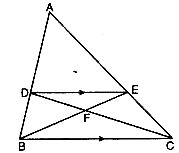
In the given figure, ABC is a triangle. DE is parallel to BC and $\frac{ AD }{ DB }=\frac{3}{2}$.
(i) Determine the ratios $\frac{ AD }{ AB }, \frac{ DE }{ BC }$.
(ii) Prove that ΔDEF is similar to ΔCBF.
Hence, find $\frac{ EF }{ FB }$
(iii) What is the ratio of the areas of ΔDEF and ΔBFC?