MCQ
Variable valency is shown by
  • A
    Typical elements
  • B
    Normal elements
  • Transition elements
  • D
    None of these

Answer

Correct option: C.
Transition elements
c
(c)Transition metals show variable valency.

Need a full question paper?

Generate a complete, print-ready paper with questions like this in minutes — across 16+ boards, with answer keys.

Start Generating Free

Similar questions

$1.22\, \mathrm{~g}$ of an organic acid is separately dissolved in $100 \,\mathrm{~g}$ of benzene $\left(\mathrm{K}_{\mathrm{b}}=2.6\, \mathrm{~K}\, \mathrm{~kg} \,\mathrm{~mol}^{-1}\right)$ and $100\, \mathrm{~g}$ of acetone $\left(\mathrm{K}_{b}=1.7\, \mathrm{~K} \,\mathrm{~kg} \,\mathrm{~mol}^{-1}\right) .$ The acid is known to dimerize in benzene but remain as a monomer in acetone. The boiling point of the solution in acetone increases by $0.17^{\circ} \mathrm{C}$.

The increase in boiling point of solution in benzene in ${ }^{\circ} \mathrm{C}$ is $\mathrm{x} \times 10^{-2}$. The value of $\mathrm{x}$ is ..... .(Nearest integer)

$[$ Atomic mass : $\mathrm{C}=12.0, \mathrm{H}=1.0, \mathrm{O}=16.0]$

Given that $E_{{O_2}/{H_2}O}^o =  + 1.23\,V$; $E_{{S_2}O_8^{2 - }/SO_4^{2 - }}^o =   2.05\,V$; $E_{B{r_2}/B{r^ - }}^o = +1.09\,V$; $E_{A{u^{3 + }}/Au}^o = 1.4\,V$. The strongest oxidizing agent is
Identify pair of compounds which can be distinguished by iodoform test?
Considering ${H_2}O$ as a weak field ligand, the number of unpaired electrons in ${[Mn{({H_2}O)_6}]^{2 + }}$ will be (At. No. of $Mn  = 25$) 
In electrolysis of aq.$NiI_2$ solution using $Ni$ electrodes on passing $1$ equivalent charge, mass of cathode Given $[Ni = 59, I = 127]$
A metal $M$ which is not affected by strong acids like conc. $HNO_3,$ conc. $H_2SO_4$ and conc. solution of alkalies like $NaOH, KOH$ forms $MCl_3$ which finds use for toning in photography. The metal $M$ is
$EAN$ of the central metal in the complexes -$K_2[Ni(CN_4)], [Cu(NH_3)_4]SO_4$ and $K_2[PtCl_6]$ are respectively.
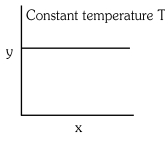
The given graph is a representation of kinetics of a reaction.

$[Image]$

The $y$ and $x$ axes for zero and first order reactions, respectively are
An alkyl bromide produces a single alkene when it reacts with sodium ethoxide and ethanol. This alkene undergoes hydrogenation and produces $ 2-$ methyl butane. What is the identity of the alkyl bromide
Which one of the following is not a transition metal