MCQ
What are $A$ and $B$ respectively

  • A
    $BHC$ and $HCB$
  • $HCB$ and $BHC$
  • C
    $HCB$ and $HCB$
  • D
    $BHC$ and $BHC$

Answer

Correct option: B.
$HCB$ and $BHC$
b

Need a full question paper?

Generate a complete, print-ready paper with questions like this in minutes — across 16+ boards, with answer keys.

Start Generating Free

Similar questions

If a carbon atom is attached to $ - H, - OH, - COOH$ and $ - OCO{C_2}{H_5}$ number of chiral $C -$ atoms in compound is
For the reaction $A(g) + 2B(g) \to 2C(g) + 3D(g)$, the value of $\Delta E$ at ${27\,^o}C$ is $ 19.0\, kcal$ . The value of $\Delta H$ for the reaction would be.......$kcal$  $(R = 2.0\,cal\,{K^{ - 1}}mo{l^{ - 1}})$
If enthalpies of formation of ${C_2}{H_4}(g),\,C{O_2}(g)$ and ${H_2}O(l)$ at ${25\,^o}C$ and $1\,atm$ pressure be $ 52, -394 $ and $ - 286\,kJ\,mo{l^{ - 1}}$ respectively, the enthalpy of combustion of ${C_2}{H_4}(g)$ will be.....$kJ\,mo{l^{ - 1}}$
Calculate the heat of formation of $PC{l_5}(s)$ from the following data

$2P(s) + 3C{l_2}(g)\,\, \to \,\,2PC{l_3}(l);\,\Delta H = - 151.8\,kcal$

$PC{l_3}(l) + C{l_2}(g)\,\, \to \,\,PC{l_5}(s);\,\,\Delta H = - 32.8\,kcal$

......$kcal$

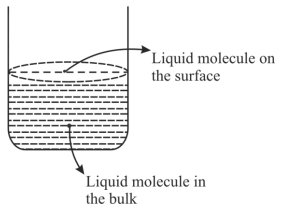
Based on the given figure, the number of correct statement/s is/are $........$.

$A.$ Surface tension is the outcome of equal attractive and repulsion forces acting on the liquid molecule in bulk.

$B.$ Surface tension is due to uneven forces acting on the molecules present on the surface.

$C.$ The molecule in the bulk can never come to the liquid surface.

$D.$ The molecules on the surface are responsible for vapour pressure if the system is a closed system.

What is the oxidation state of osmium in $7B$ and $7C$, respectively ?
The nucleus of the atom consists of
Consider the following statements

$(a)$ The $pH$ of a mixture containing $400\, mL$ of $0.1\, M\, H_2SO_4$ and $400\, mL$ of $0.1\, M\, NaOH$ will be approximately $1.3$.

$(b)$ Ionic product of water is temperature dependent.

$(c)$ A monobasic acid with $K_a = 10^{-5}$ has a $pH = 5$. the degree of dissociation of this acid is $50\%$.

$(d)$ The Le Chatelier’s principle is not applicable to common-ion effect.

The correct statements are:

Hess law is based on
The solubility product of $\mathrm{Cr}(\mathrm{OH})_{3}$ at $298\; \mathrm{K}$ is $6.0 \times 10^{-31} .$ The concentration of hydroxide ions in a saturated solution of $\mathrm{Cr}(\mathrm{OH})_{3}$ will be