Question
What are biodegradable polymers? Write the structural formula of a biodegradable polymer.

Answer

Get the step-by-step solution for this question inside the Vidyadip app.

Get the answer in the app

Need a full question paper?

Generate a complete, print-ready paper with questions like this in minutes — across 16+ boards, with answer keys.

Start Generating Free

Similar questions


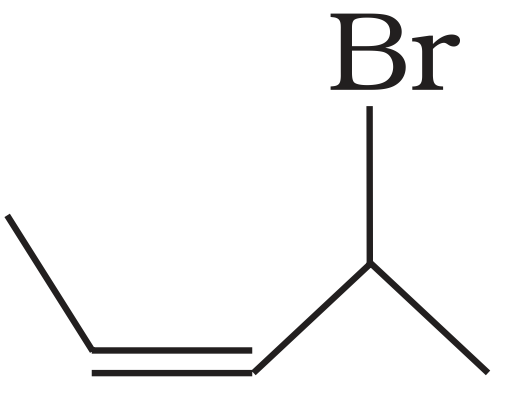
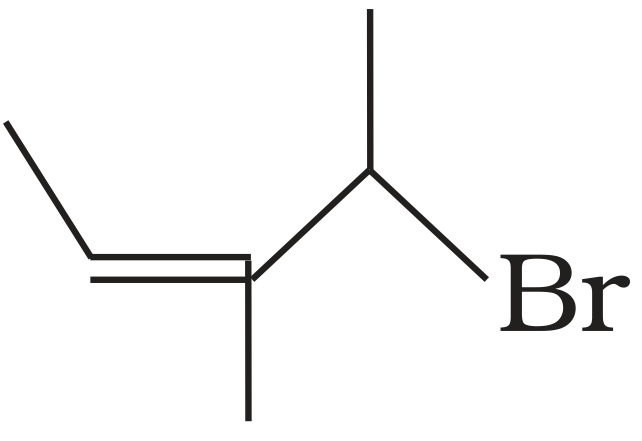
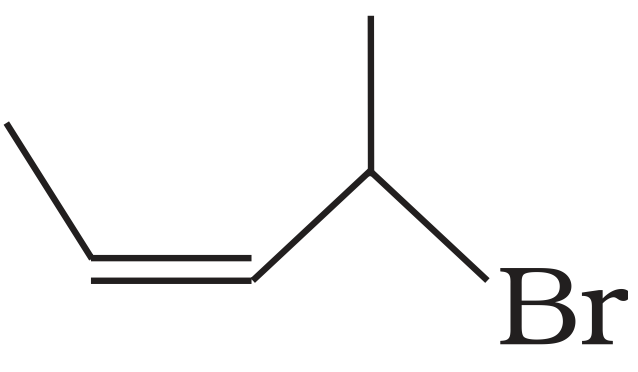
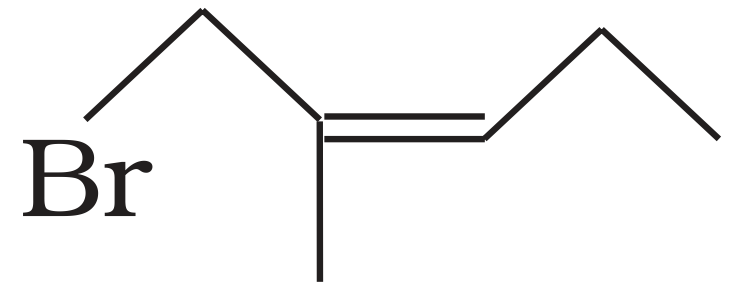
Match the structures given in Column I with the names in Column II.
  Column I   Column II
(i) (a) 4-Bromopent-2-ene
(ii) (b) 4-Bromo-3-methylpent-2-ene
(iii) (c) 1-Bromo-2-methylbut-2-ene
(iv) (d) 1-Bromo-2-methylbut-2-ene
$^{238}_{92}\text{U}$ Change to $^{206}_{92}\text{Pb}$ by successive radioactive decay. A sample of urenium ore was anlaysed and found to contain $1.0 g$ of $^{238}\text{U}$ and $0.1 g$ of $^{206}\text{Pb}$ had accumulated due to decay of $^{238}\text{U}$, find out the age of ore. $($Half$-$life of $^{238}\text{U}= 4.5\times10^9$ years$)$.
$18g$ of glucose, $C_6H_{12}O_6($Molar Mass$=180g mol^{-1})$ is dissolved in $1\ kg$ of water in a sauce pan. At what temperature will this solution boil?
$(K_{b }$ for water $= 0.52 K \ kg mol^{-1}$, boiling point of pure water $= 373.15 K).$
Give reason for the following: $\ce{CH_3CHO}$ is more reactive than $\ce{CH_3COCH_3}$ towards reaction with $\ce{HCN}$.
What are reduction potential and oxidation potential?
Why on dilution the $m Λ_m$ of $\ce{CH_3COOH}$ increases drastically, while that of $\ce{CH_3COONa}$ increases gradually?
Using the standard electrode potentials given in Table $3.1,$ predict if the reaction between the following is feasible$: Ag(s)$ and $Fe^{3+} (aq)$
For which type of reactions, order and molecularity have the same value?
The molar mass of a volatile substance cannot be determined from boiling point elevation. Why?
Arrange the following compound in increasing order of their reactivity in nucleophilic addition reaction.
Benzaldehyde, p-Tolualdehyde, p-Nitrobenzaldehyde, Acetophenone.