Question
What are carcinogens? Describe their categories.

Answer

Cancer causing agents are called carcinogens which may be physical, chemical or biological:
  1. Ionising radiations like X-rays and gamma rays and non-ionising radiations like UV cause DNA damage leading to oncogenic transformation.
  2. Chemical carcinogens are caffeine, nicotine.
  3. Some viruses are also act as carcinogen, are called oncogenic viruses.

Need a full question paper?

Generate a complete, print-ready paper with questions like this in minutes — across 16+ boards, with answer keys.
Start Generating Free

Similar questions

Construct an ideal pyramid of energy when 10,00000 J of sunlight is available. Label all its levels.
How is the amplification of a gene sample of interest carried out using Polymerase Chain Reaction (PCR)?
What is the difference between gaseous and sedimentary cycles?
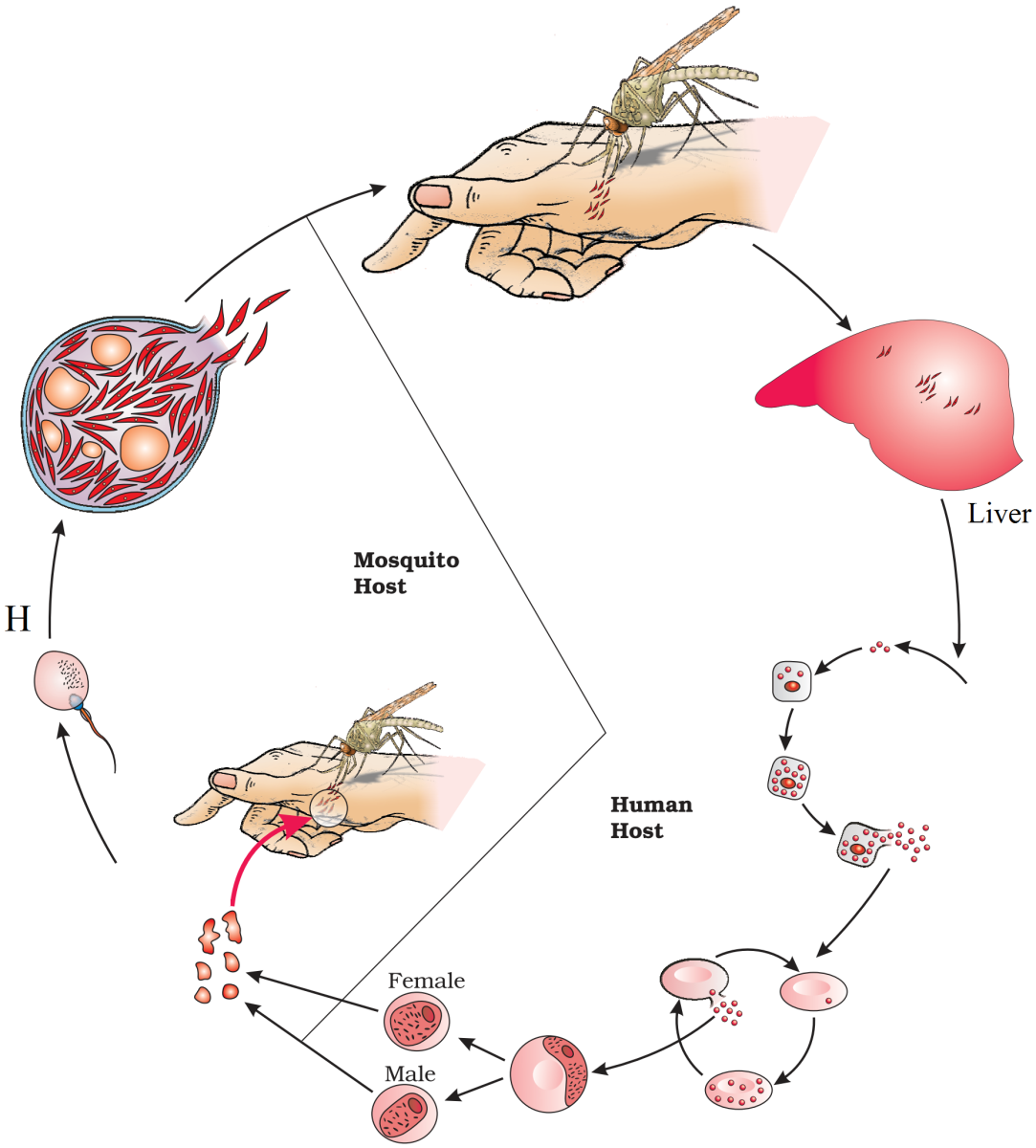
Refer to the diagram given below and answer the questions that follow.
  1. The parasite reproduces in human host by which method?
  2. The sexual stages of parasite are referred to as?
  3. Where does the fertilisation and development of parasite takes place in mosquito body?
  4. What are sporozoites?
  5. What is the cause of cycles of fever during malaria?
Explain how PCR technique can be used for amplification of a small amount of DNA template.
How do genes and chromosomes share similarity from the point of view of genetical studies?
State the views of Oparin and Haldane on evolution. How does S.L. Miller's experiment support their views?
OR
  1. Explain the theory of abiogenesis.
  2. How did Miller demonstrate experimentally the chemical evolution that happened three billion years ago?
Although sexual reproduction is a long drawn, energy-intensive complex form of reproduction, many groups of organism in Kingdom Animalia and Plantae prefer this mode of reproduction.
Give at least three reasons for this.
What will happen to an ecosystem if:
All producers are removed.
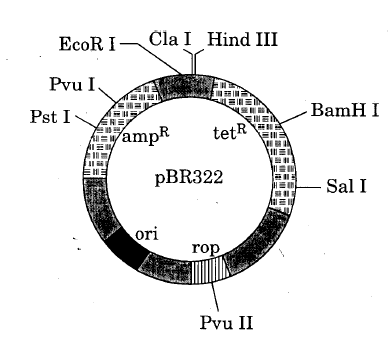
  1. Name the organism in which the vector shown is inserted to get the copies of the desired gene.
  2. Mention the area labelled in the vector responsible for controlling the copy number of the inserted gene.
  3. Name and explain the role of a selectable marker in the vector shown.
​​​​​​​