Question
What are chorionic villi?

Answer

Chorionic villi are the finger-like projections formed by the trophoblast immediately after implantation; they form the foetal part of the placenta.

Need a full question paper?

Generate a complete, print-ready paper with questions like this in minutes — across 16+ boards, with answer keys.
Start Generating Free

Similar questions

Write a short note on
Adaptations of plants to water scarcity:
How did an American Company, Eli Lilly use the knowledge of rDNA technology to produce human insulin?
Or
How did Eli Lilly synthesise the human insulin? Mention one difference between this insulin and the one produced by the human pancreas.

Or
How did Eli Lilly Company go about preparing the human insulin? How is the insulin thus produced different from that produced by the functional human insulin gene?
What are viruses parasitising bacteria called? Draw a well labelled diagram of the same.
Microbes are used for industrial production on a large scale. Explain with examples.
There are many animals that have become extinct in the wild but continue to be maintained in Zoological parks.
  1. What type of biodiversity conservation is observed in this case?
  2. Explain any other two ways which help in this type of conservation.
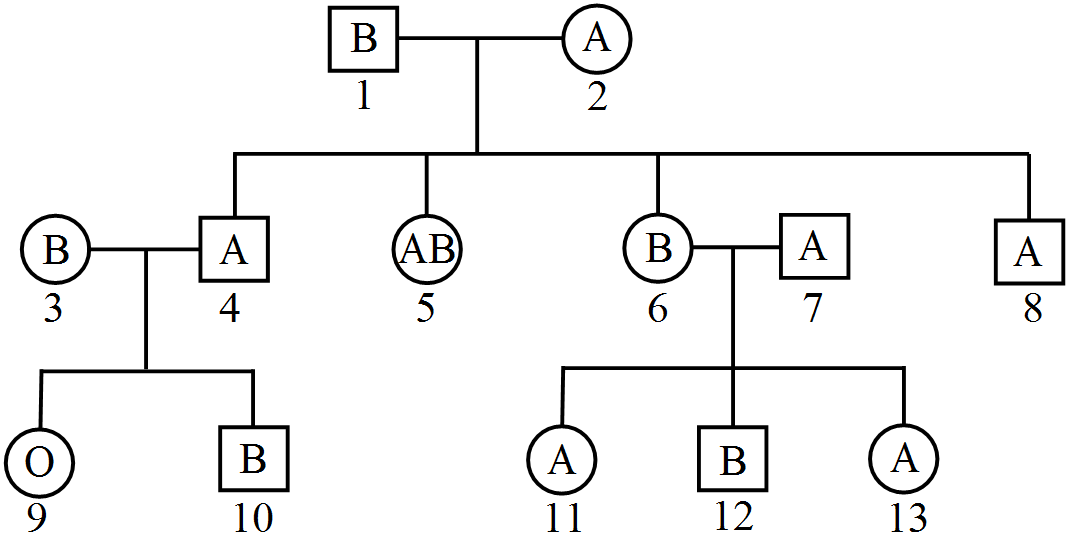
Study the pedigree chart given below, showing the inheritance pattern of blood groups in a family and answer the given questions.
  1. Give the possible genotypes of the individuals 1 and 2.
  2. Which antigen will be present on the plasma membrane of RBCs of individuals 5 and 9?
  3. Give the genotypes of the individuals 3 and 4.
Males in whom testes fail to descend to the scrotum are generally infertile. Why?
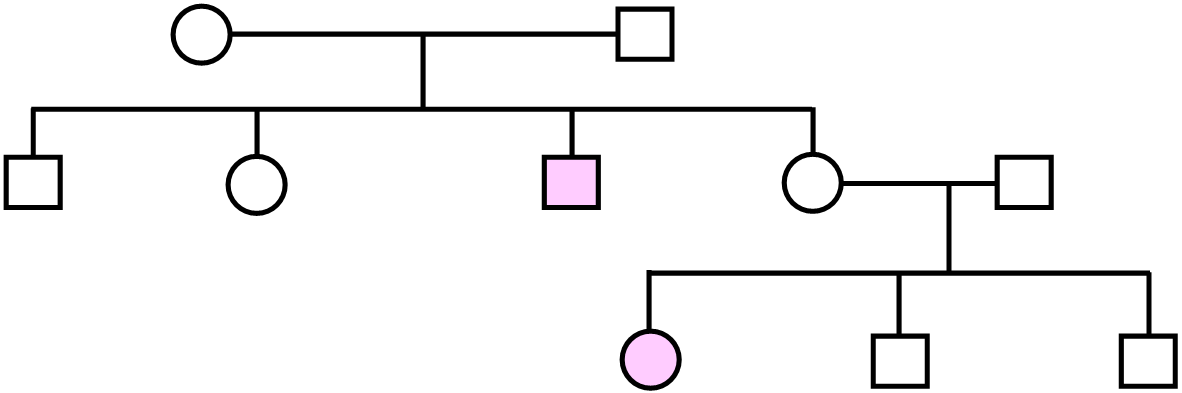
Study the given pedigree chart and answer the questions that follow:
Is the trait sex–linked or autosomal?
  1.  
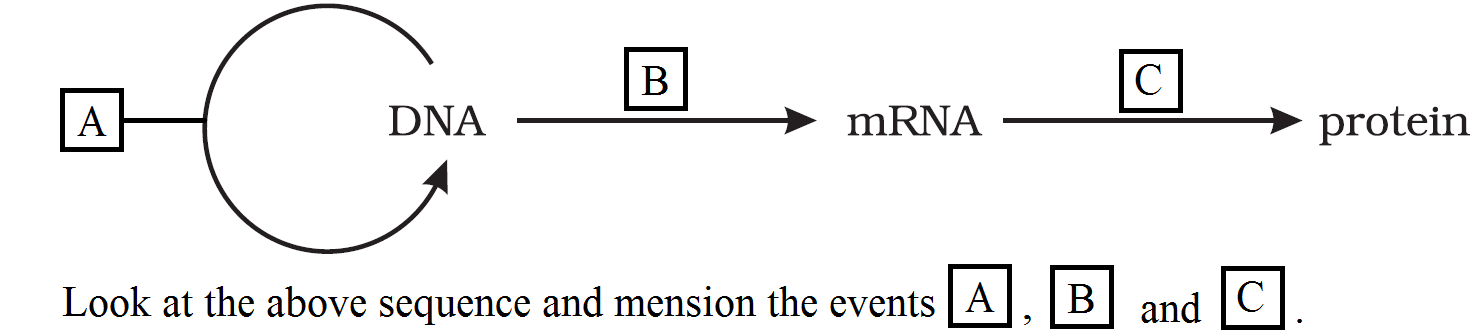
  1. What does central dogma state in molecular biology? How does it differ in some viruses?
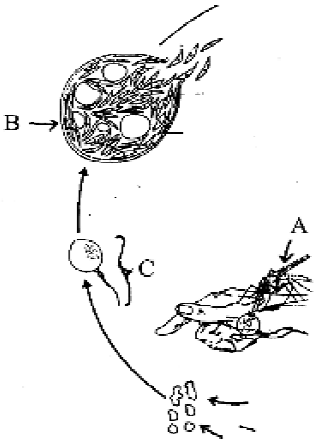
Study a part of the life cycle of malarial parasite given below. Answer the questions that follow:
  1. Mention the roles of ‘A’ in the life cycle of the malarial parasite.
  2. Name the event ‘C and the organ where this event occurs.
  3. Identify the organ ‘B’ and name the cells being released from it.