Question
What are polysachharides?

Answer

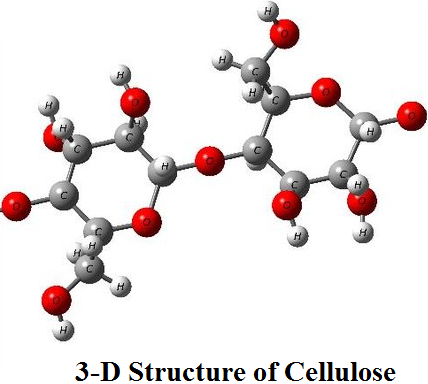
Polysaccharides are long chains of sugars. They are threads containing different monosaccharides as building blocks.

In a polysaccharide chain (say glycogen), the right end is called the reducing end and the left end is called the non-reducing end. Starch forms helical secondary structures. In fact, starch can hold 12 molecules in the helical portion.
Examples: Cellulose, chitin.

Need a full question paper?

Generate a complete, print-ready paper with questions like this in minutes — across 16+ boards, with answer keys.
Start Generating Free

Similar questions

Bring out the differences between striated and smooth muscles.
Explain the advantage of the complete partition of ventricle among birds and mammals and hence leading to double circulation.
Kritika's biology teacher explained the different phases of plant growth in her class. She taught that growth of plants takes place in three successive steps or phases from germination to maturation phase. Kritika reached home and asked her elder sister, a biology post-graduate student to clarify the phases in detail. Kritika's sister told her that she will explain the complete process with the help of experimentation. She took few seeds of pea and germinated them on a circular filter paper, soaked with water in a petri-dish. After two days of growth, she picked up a couple of seedlings with straight radicle and marked it from tip to base with the help of a waterproof ink and again placed the seedlings on moist filter paper to allow them to grow.
  1. Mention different phases of growth in plants?
  2. List the conditions required for growth.
  3. What values are reflected from nature of Kritika's sister?
Mango and coconut are ‘drupe’ type of fruits. In mango fleshy mesocarp is edible. What is the edible part of coconut? What does milk of tender coconut represent?
Briefly describe the life cycle phases of fungi.
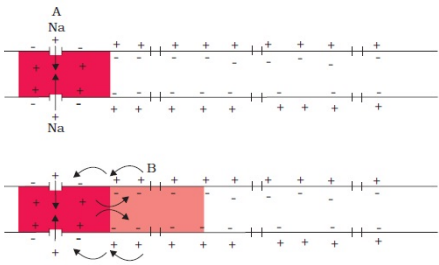
Examine the following diagram and answer the following questions:

Image
i. What is the diagram representing?
ii. When point A becomes permeable to Na¹, what change occurs in the polarity of the membrane.
iii. What is the potential difference at point A called ?
  1. Draw a labelled diagram of the basic body plan of chordates.
  2. Mention the four characteristic features which all chordates possess.
There are 26 bones in the vertebral column of a human adult. Categorise them on the basis of their location and mention the specific number in each of the categories.
Who was the first to attempt a more scientific basis for classification of living organisms? How did he classify plants and animals?
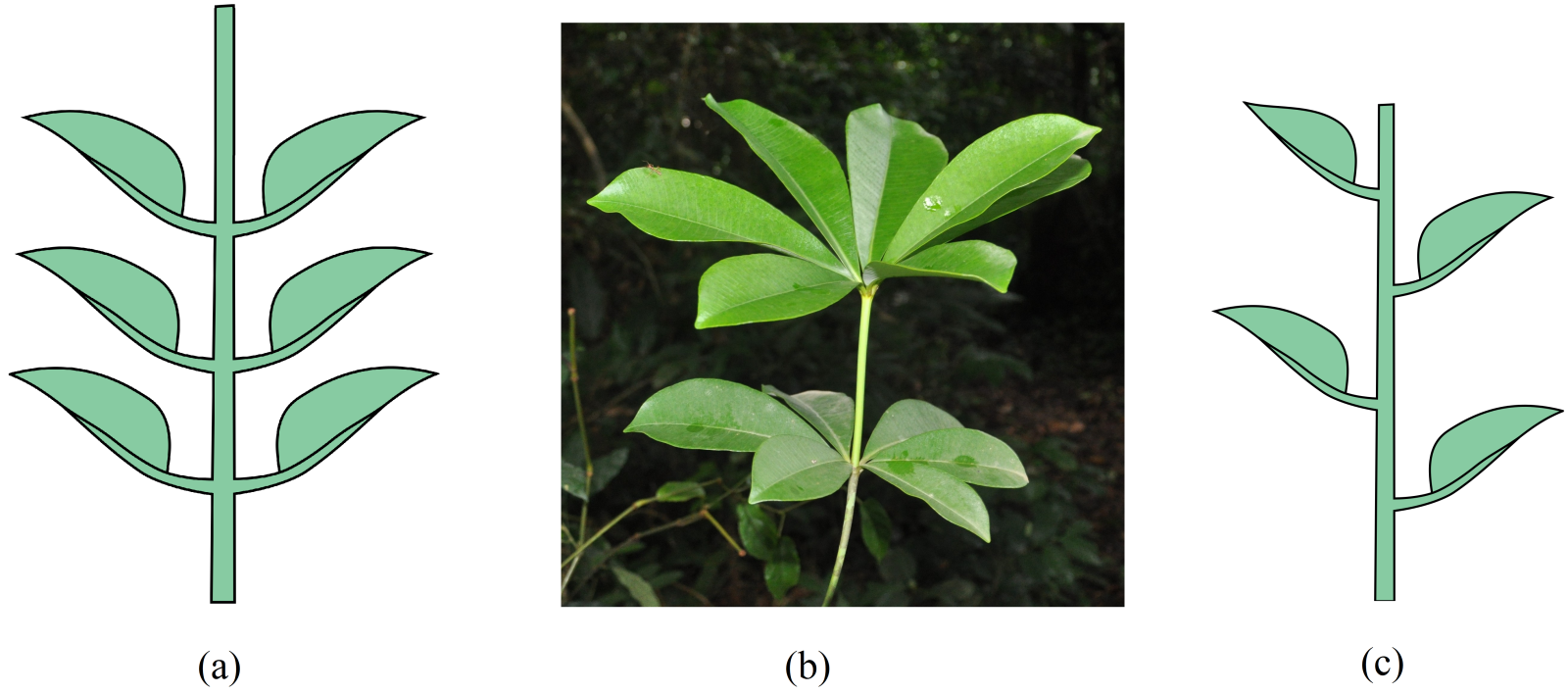
Different types of phyllotaxy are shown in the given figures. Name the phyllotaxy shown in (a), (b) and (c). Give one example of each type.