Question
What are the cellular components of blood?

Answer

Blood is a fluid connective tissue. It is composed of plasma (fluid) and blood cells (corpuscles). Cellular components of blood (blood corpuscles) constitute about 45% of blood volume.
Three types of blood cells are:
  1. Erythrocytes or red blood cells: They are most abundant blood cells. Normal RBC count is 5-5.5 million/mm3 in males and 4.5-5 million/mm3 in females. RBCs help in transport of gases and maintain blood pH.
  2. Leucocytes or white blood cells: The normal WBC count is 5000-6000/mm3 of blood. They are involved in immune response of body and act as soldiers and scavangers.
  3. Thrombocytes or blood platelets: There are about 2, 50,000 platelets/mm3 of blood. They are involved in blood clotting.

Need a full question paper?

Generate a complete, print-ready paper with questions like this in minutes — across 16+ boards, with answer keys.
Start Generating Free

Similar questions

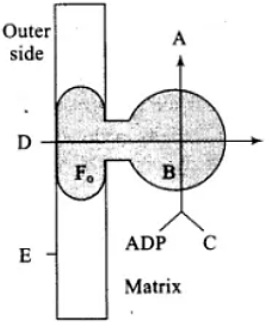
Given below is a diagram showing ATP synthesis during aerobic respiration, replace the symbols A, B, C, D and E by appropriate terms given in the box.

Image
F1, Particle, Pi, 2H+, Inner mitochondrial membrane, ATP, Fo particle, ADP
Schematically represent primary, secondary and tertiary structures of a hypothetical polymer say for example a protein.
What are the disorders related to circulation? Describe each.
Give comparison between the following:
$C _3$ and $C _4$ pathways
(b) Cyclic and non-cyclic photophosphorylation
(c) Anatomy of leaf in $C _3$ and $C _4$ plants
Blood flow in the heart during a cardiac cycle.
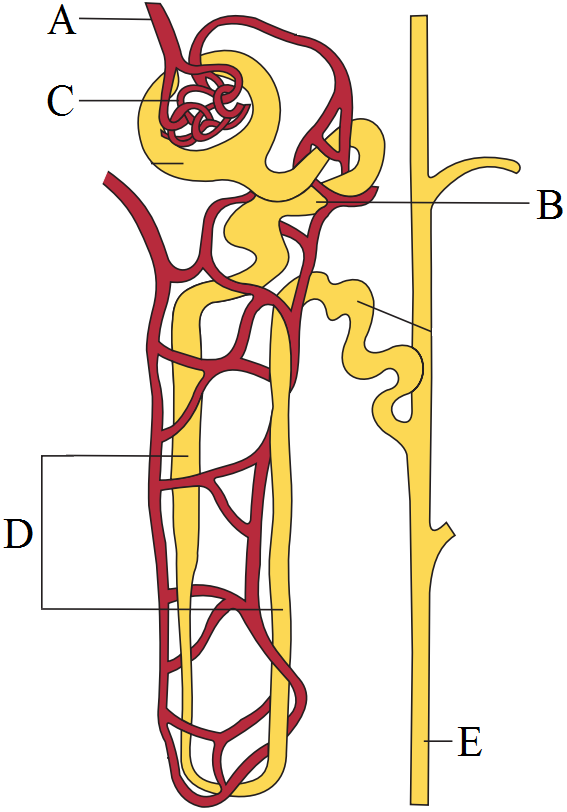
  1. Study the given structure carefully and label the parts given as A, B, C, D and E.
  2. Give one major function of each of these.

During the biology class, teacher taught that water should be conserved in the body of animals because it is precious and non-renewable in some cases. He asked the student that how the nature conserves water even through the excretory system are present in different organisms.
  1. Name three major excretory products of animals.
  2. Does loop of Henle play any role in water conservation in humans?
  3. Explain excretory organs in different animal groups.
  4. What values does the teacher possess?
Explain glycolysis.
  1. Where is sino-atrial node (SAN) located in human heart? Why is SAN called pacemaker of the heart?
  2. What is electrocardiogram? What represents P-wave, QRS complex and T-wave in a standard ECG?
  3. What are the causes of Angina and Coronary Artery Disease?
Distinguish between Chordates and Non-Chordates.