Question
What are the different types of cheese?

Answer

(i) Freshly prepared cheese is always soft, eg. cottage cheese, cream cheese, Mozzarella cheese.
(ii) On storing for 3 to 12 months, semi-hard cheddar cheese is formed.
(iii) After ripening for 12 -18 months, very hard cheese called parmesan cheese is formed.

Need a full question paper?

Generate a complete, print-ready paper with questions like this in minutes — across 16+ boards, with answer keys.

Start Generating Free

Similar questions

Two caricatures presenting the situations of the year 1998 and 2017 about playing on playground are given below. Observe those caricatures. Express your opinion about arising of such different situations.
Image
Sketch two ways in which solar cells can be connected. Also draw the diagrams to show the arrangement of solar cells to form solar? panel and solar array.
(c) Solar panel.
Old people sometimes use bifocal glasses.
What is meant by an ionic bond?
Write any three physical properties of nonmetals.
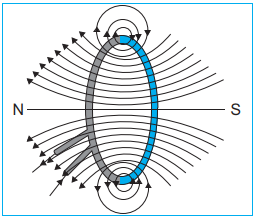
State what is the direction of the magnetic field lines with respect to each other in every segment of the loop and the centre of the loop. Where is the magnetic field strongest? (Refer the following figure).
Image
A white shirt has a yellow stain of curry. When soap is rubbed on this shirt during washing, the yellow stain turns reddish-brown. On rinsing the shirt with plenty of water, the reddish-brown stain turns yellow again.
  1. Name the natural indicator present in curry stain.
  2. Explain the changes in colour of this indicator which take place during washing and rinsing the shirt.
  3. What is the nature of soap (acidic/ basic) as shown by the indicator present in curry stain?
In the case of a convex lens, show the path of the refracted ray when the incident ray of light (1) is parallel to the principal axis of the lens (2) passes through the focus of the lens (3) passes through the optical centre of the lens.
Rearrange the columns 2 and 3 so as to match with the column 1.
Column 1Column 2Column 3
i. Triada. Lightest and negatively charged particle in all the atoms1. Mendeleev
ii. Octaveb. Concentrated mass and positive charge2. Thomson
iii. Atomic numberc. Average of the first and the third atomic mass3. Newlands
iv. Periodd. Properties of the eighth element similar to the first4. Rutherford
v. Nucleuse. Positive charge on the nucleus5. Dobereiner
vi. Electronf. Sequential change in molecular formulae6. Moseley
(degenerated, red bone marrow, adipose connective tissue, blastocyst, umbilical cord, Differentiation)
………… of stem cells form can form various tissues, in the body. Stem cells are present in the ………….. by which the foetus is joined to the uterus of the mother. Stem cells are also present in the ……….. stage of embryonic development. Stem cells are present in ……….. and ………… of adult human beings. It has become possible to produce different types of tissues and the ……… part of any organ with the help of these stem cells.