Question
What are the problems in areas of high population densities?

Answer

The ratio of the population of a country to its area is population density. While discussing population distribution, density of population is also considered. The density is calculated, as per the formula given below.
Density of population = Population of a region/Area of a region.

The problems in areas of high population densities are as follows:
1. Pollution – Pollution is one of the major reasons which people face due to high population density. Due to an increase in land degradation by making houses and flats, land pollution will be caused, water will be contaminated by a huge number of people, resulting in water pollution and huge number of vehicles will cause air pollution.

2. Overcrowded – The areas with high population density become overcrowded, which bring chaos and lack of peace in the society.
3. Lack of open space – High population density makes it difficult to get a free open space.

Need a full question paper?

Generate a complete, print-ready paper with questions like this in minutes — across 16+ boards, with answer keys.
Start Generating Free

Similar questions


Image

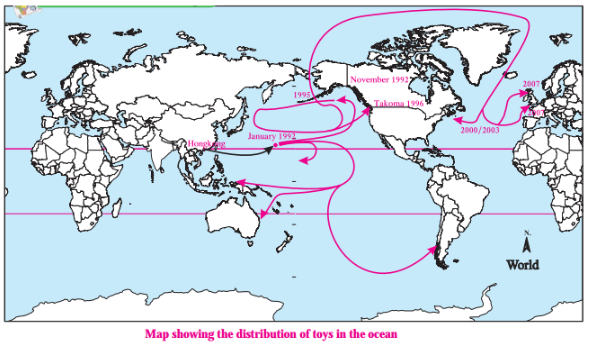
(1) Where did a container full of toys fall on 10th January, 1992?
(2) Where did some of the toys reach on 16th November, 1992?
(3) Where did some of the toys reach by the year 2000?
(4) Where did some of the toys reach by the year 2003?
(5) Where did some of the toys reach by the year 2007?
(6) Why did the toys travel in this way?
What are the problems in area of low population densities?

Image
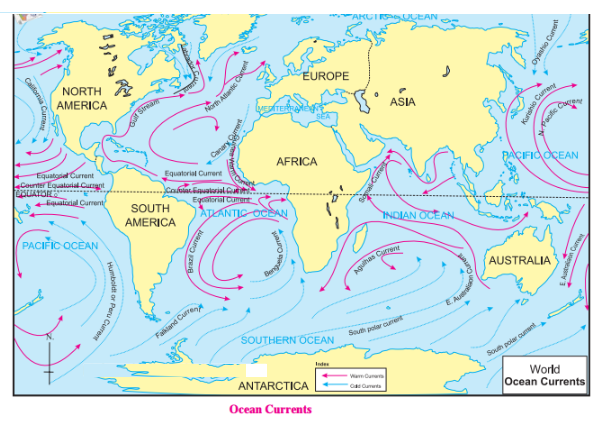
(1) How does the Humboldt current affect the climate of the South America?
(2) In which oceans are counter equatorial currents not observed and why?
(3) Which currents are absent in the northern part of the Indian Ocean and why?
(4) In which regions do the cold and warm ocean currents meet?
prepare a model of the ocean floor.

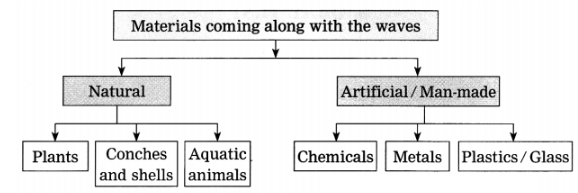
Do this activity when you go to the seashore with your parents or teachers. Observe the materials which have come with the waves. Classify them as per the flowchart given below:Image
(1) What will happen because of non-perishable items?
(2) Suggest measures to control deposition of non-perishable items on the coast.
(3) How will you run a campaign of environmental conservation to keep the coasts clean?
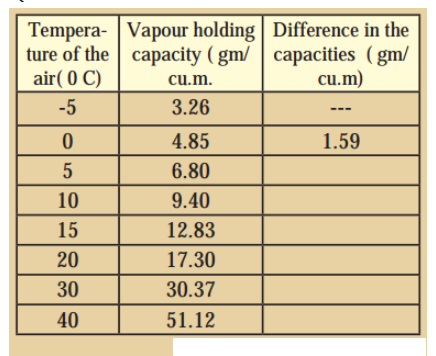
The vapour-holding capacity of 1 cu.m, of air in various temperature is given in the following table.

Calculate the difference in the capacities by observing the following table :
(Note: The answer is given directly.)

Image


Image

(1) In what context is this logo?
(2) What will be the benefit of this programme?
(3) What is correlation between this programme and employment?
(4) Which are the Navratna industries in India?
(5) Why do you think they have been accorded this status of Navratna?

Image

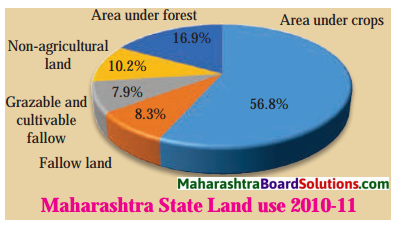
(1) What is the percentage of land suitable for cultivation?
(2) What is the percentage of barren land?
(3) What is the percentage of land under forest in Maharashtra?
(4) What is the percentage of non- agricultural land in Maharashtra?
The interior of the earth
Imagine about the earth’s interior and- write 10-12 sentences on it.