It's Natural. It's Yummy: It's Natural Ice-cream
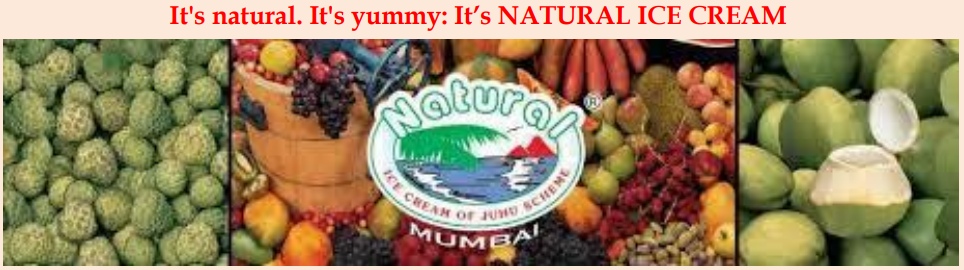
It's natural. It's yummy. Those who have tasted it, swear by it. The unique feature of the ice-creams manufactured by Natural Ice-cream is that, they contain no artificial flavours, preservatives or stabilisers, only fresh fruit pulp or dry fruits.
Started as a 300 sq ft ice-cream parlour at Juhu, a North-West Mumbai suburb, in 1984, the brand is a runaway success. It now has 89 franchise outlets across West and South India: 47 in Mumbai, 29 in the neighbouring urban clusters of Navi Mumbai, Thane and Pune and the rest scattered across selected cities of Maharashtra and neighbouring states. Ten more will be opened in the current financial year. Natural's revenues have risen from 14 lakh in 1986 to 40 crore in 2010-11. The franchises may be many, but the manufacturing hub is just one, located in another Mumbai suburb, Kandivali. Every morning, a fleet of trucks rolls out from the factory carrying the ice-cream to all the Natural outlets, thus ensuring quality is not compromised.
The store at Juhu has been renovated and expanded repeatedly and is now more than 3 times its original size. 'It is a landmark in the area', says a beaming Kamath. It all began after Kamath broke away from his elder brother's ice-cream business, Gokul Ice-cream, in 1983. 'I took my share of the inheritance and set-up Natural', says Kamath. From the start, he was at enormous pains to keep to quality, a trait he maintains to this day. Seasonal fruits are bought in bulk daily from the market, with only the best quality ones being chosen. The extracted pulp is heated, to get rid of unwanted bacteria and then stored in aluminium sealed packages.
Kamath, who from the start involved himself in every aspect of manufacture and distribution, says, he has experimented with 60 different kinds of fruit. (In case of non-seasonal fruits, however, Kamath has no choice but to buy pulp and get it machine processed).
The means, Natural uses to enforce quality control, however, impose their own limits on the brand's expansion. All the temperature control in the world cannot preserve the taste and more importantly, the freshness of ice-cream beyond a specified number of hours, during which Natural's trucks can cover only a finite distance. This explains why Natural's outlets are largely in Western India and it has no outlet yet in the national capital, despite the obvious business opportunity Delhi presents. "The National Capital Region has remained an elusive destination', admits Pai.
But the scenario may soon change. Though, Natural officials are reluctant to share details of their financial relationship with the franchises, they do reveal that plans are a foot for a major change in operational strategy. The man responsible is Kamath's son, Srinivas, who was inducted into the business in 2009. Srinivas, 27, believes that since it is dealing in perishable products such as ice-cream, Natural has to set-up manufacturing units in other locations, if it wants to keep expanding.
Srinivas wants to set-up 'mega shops' in far away cities and towns, which will both manufacture natural Ice-creams and sell it. 'Raw materials will be supplied from here, as well as trained workers who will make the ice-cream at the mega shops', says Srinivas. 'Frozen, non-perishable fruit pulp and processed milk can be stored for a maximum of 4 days without harm. That is enough time to transport them to wherever the mega shops are opened.
Again, in a change of strategy, Natural intends to open only one shop in these far away areas. 'Instead of investing in multiple franchises, Natural will have just one mega shop per town', Srinivas adds. Natural will also impose its conditions: the outlet must have atleast 2000 sq ft floor space and must be located in a central area. The first such outlet is set to open shortly in Chandigarh, depending on its success, more such shops will follow.
Natural is in no hurry to get to Delhi, but it has big plans when it does. Delhi is very big market. To meet its demand, we'll have to double our existing capacity', says Pai. Natural's ambitions go even further. 'Our founder wants Delhi to be the launch pad for Natural's global ventures, especially in West Asia', he adds.
- Why has quality control became a deterrent to Natural's expansion plans?
- How do they plan to overcome the above deterrent?
- What are their future plans?
- 'Instead of investing in multiple franchises, Natural will have just one mega shop per town,' says Srinivas. What do you understand by multiple franchises?