Question
What do you mean by homologous chromosomes?

Answer

  • Every species has definite number of chromosome pairs in their diploid cells.
  • In every pair, the two chromosomes are alike in shape, type and genes located over them.
  • Such chromosomes are called homologous chromosomes.
  • E.g. In human diploid cell, pair of chromosome no. 1 shows chromosome no. 1 from mother and chromosome no. 1 from father. These two chromosomes are homologous to each other.

Need a full question paper?

Generate a complete, print-ready paper with questions like this in minutes — across 16+ boards, with answer keys.

Start Generating Free

Similar questions

Give two circumstances in which a concave mirror can form a magnified image of an object placed in
front of it. Illustrate your answer by drawing labelled ray diagrams for both.
Explain the application of heating effect of electric current in a fuse.
Displacement reaction
Write a short note.
Catenation power
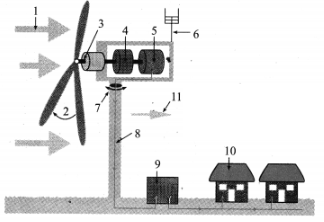
Answer the questions with the help of picture.
Image
(a) Which type of energy is produced?
(b) This power plant is based on which energy source.
(c) Is this power plant eco-friendly? How?
How many calories of heat will be absorbed when 3 kg of ice at 0 °C melts?
Choose the correct option from the bracket and complete the stanza.
(colour blind, actual, conical, light-sensitive, rodlike, colours)
The retina in our eyes is made up of many _______ cells. These cells are shaped like a rod and like a cone. The _______ cells respond to the intensity of light and give information about the brightness or dimness of the object to the brain. The _______ cells respond to the colour and give information about the colour of the object to the brain. Brain processes all the information received and we see the _______ image of the object. Rod like cells respond to the faint light also but ______ cells do not. Some people lack conical cells responding to certain colours. These persons cannot recognize those colours or cannot distinguish between different ______. These persons are said to be ______.
An object is kept at 60 cm in front of a convex lens of focal length 15 cm. Find the image distance and the nature of the image. Also find the magnification produced by the lens.
The electronic configuration of anelement X is 2,8,8,2.
i. What is the atomic number of the element X ?
ii. To which group does this element belong?
iii. In which period does this element lie?
When a copper coin is dipped in the solution of silver nitrate, it shows a lustre on its surface. Explain this process with the help of a chemical equation.